Last updated November 21, 2026
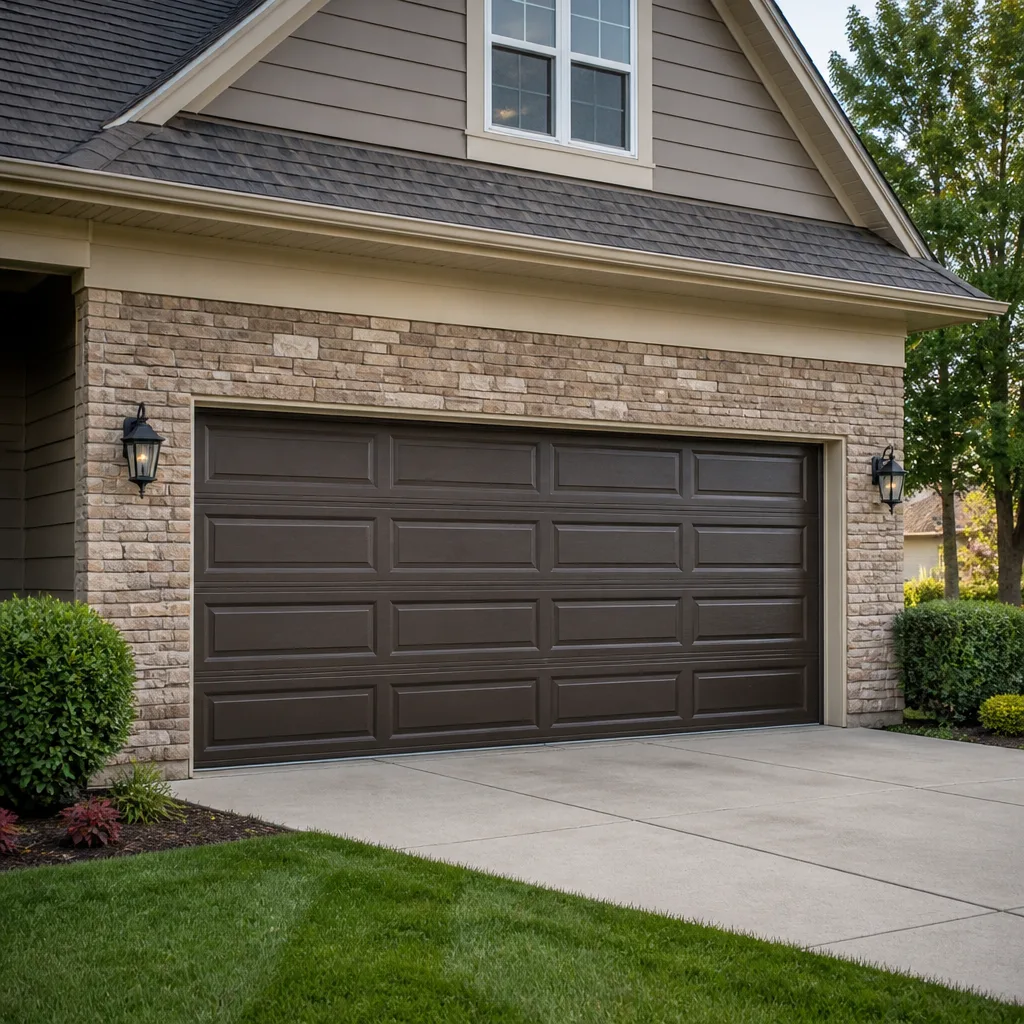 Raised-panel steel
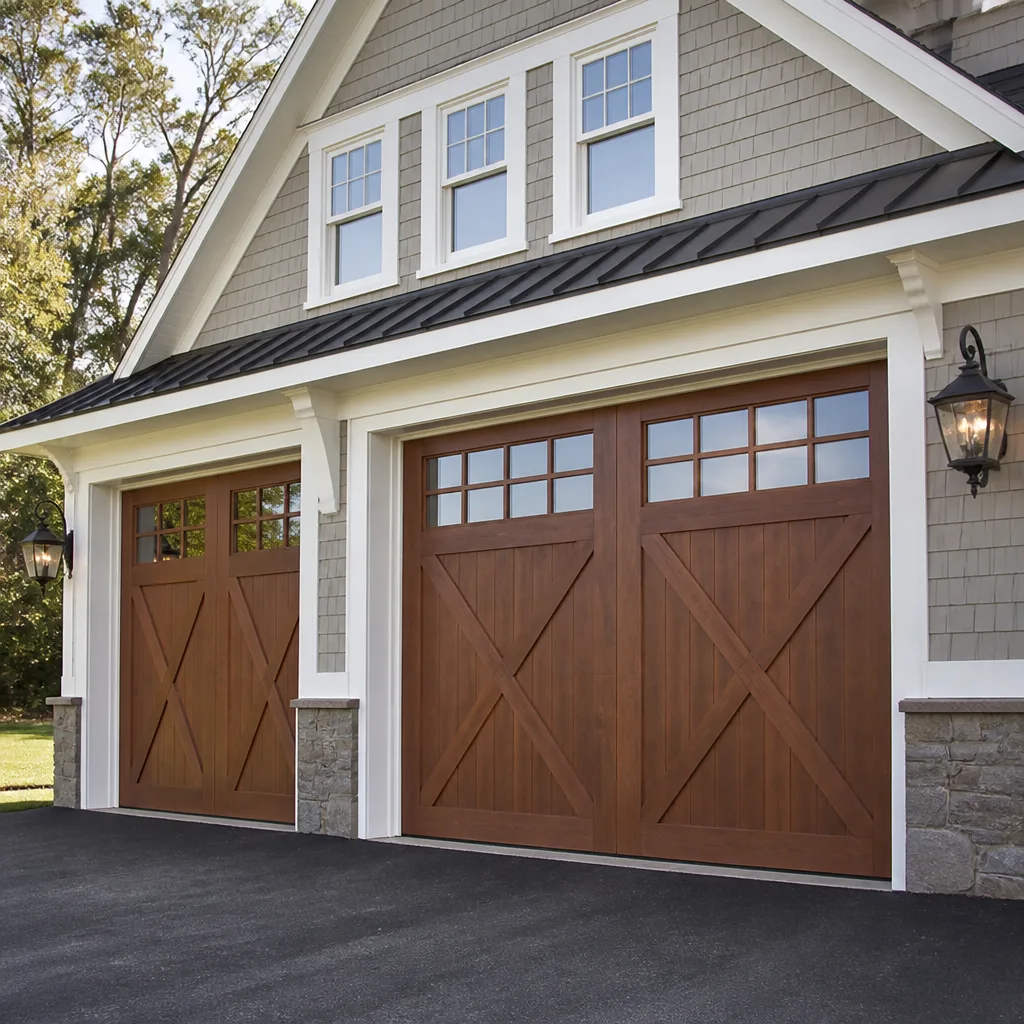 Carriage house
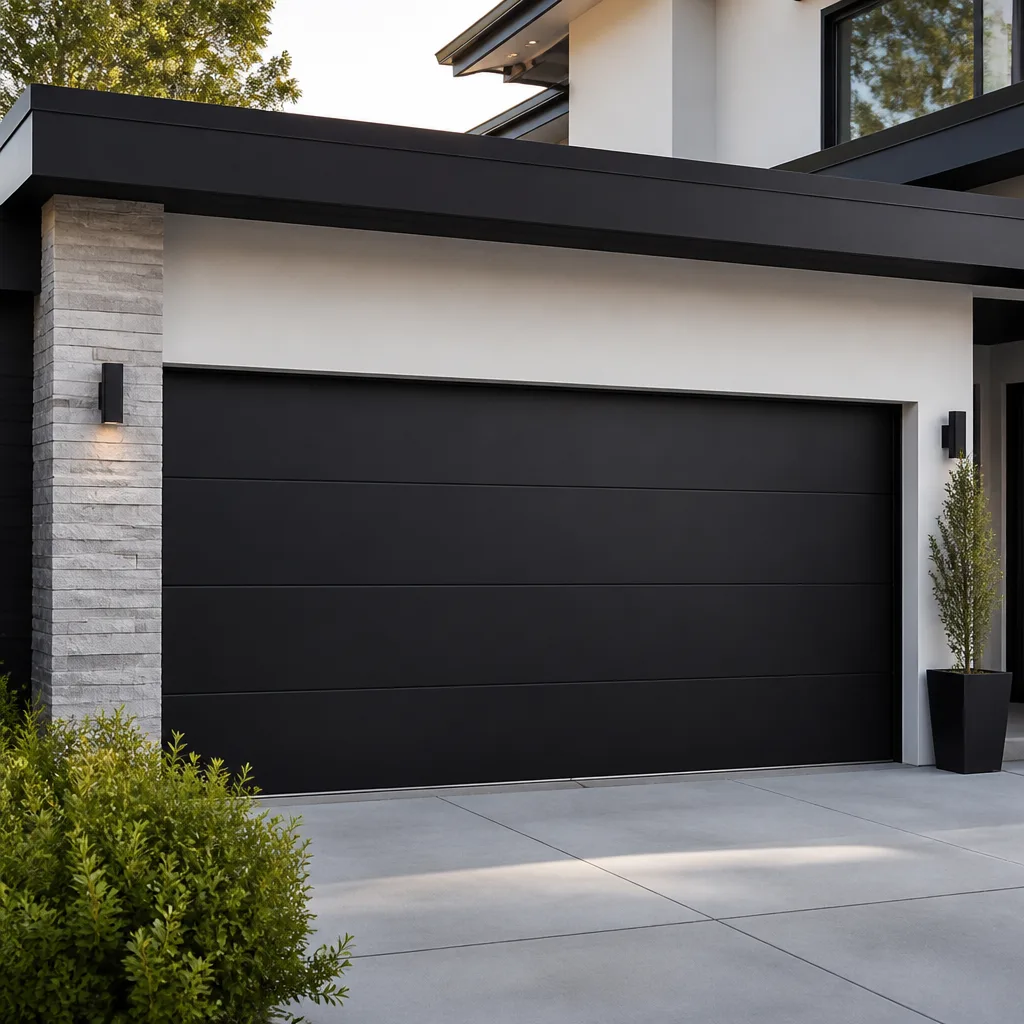 Modern flush
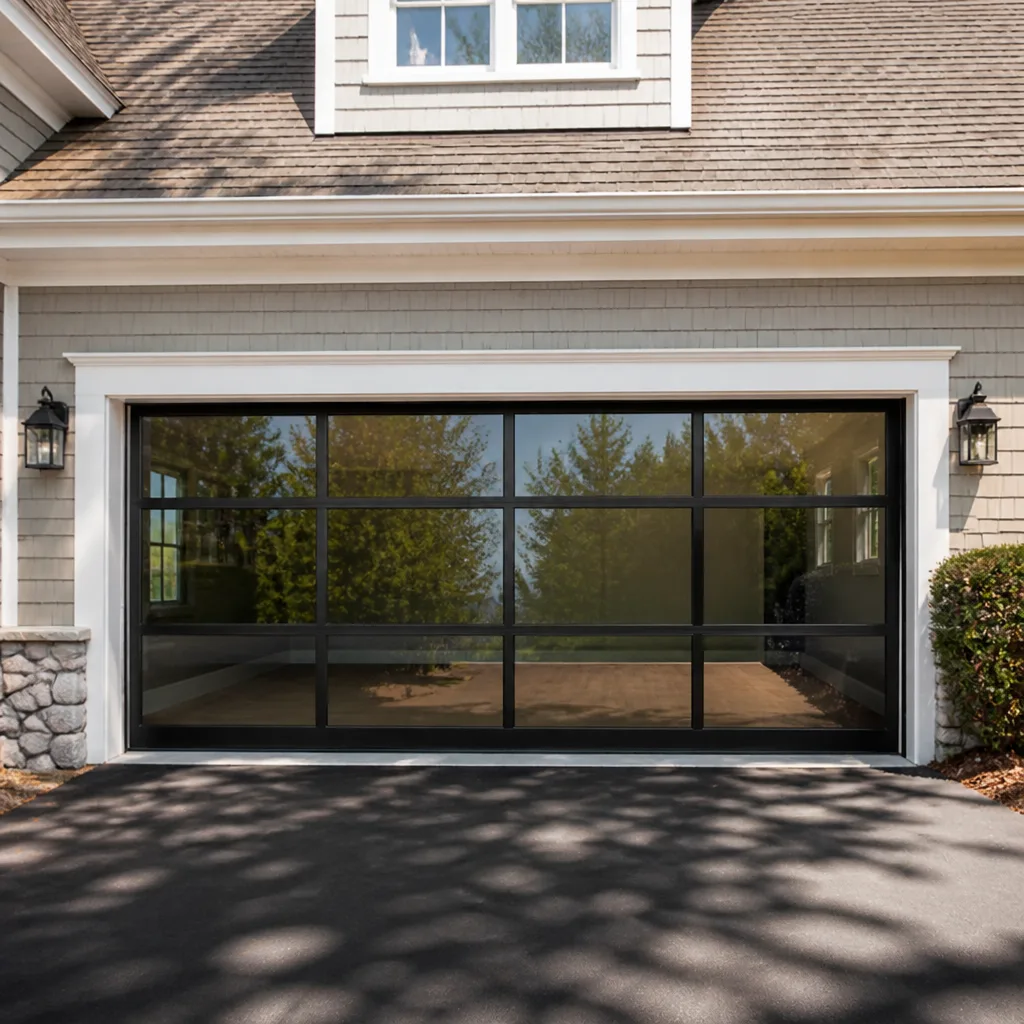 Full-view glass
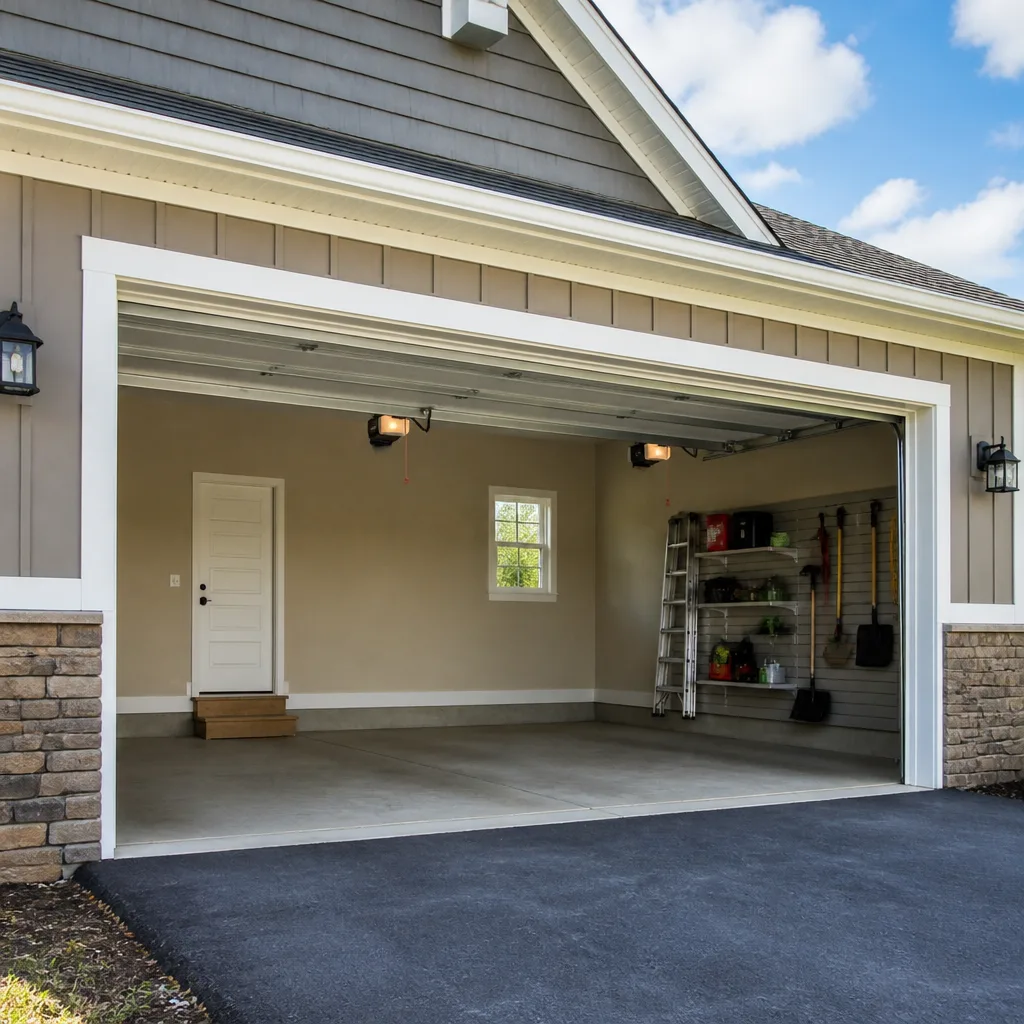 LiftMaster openers
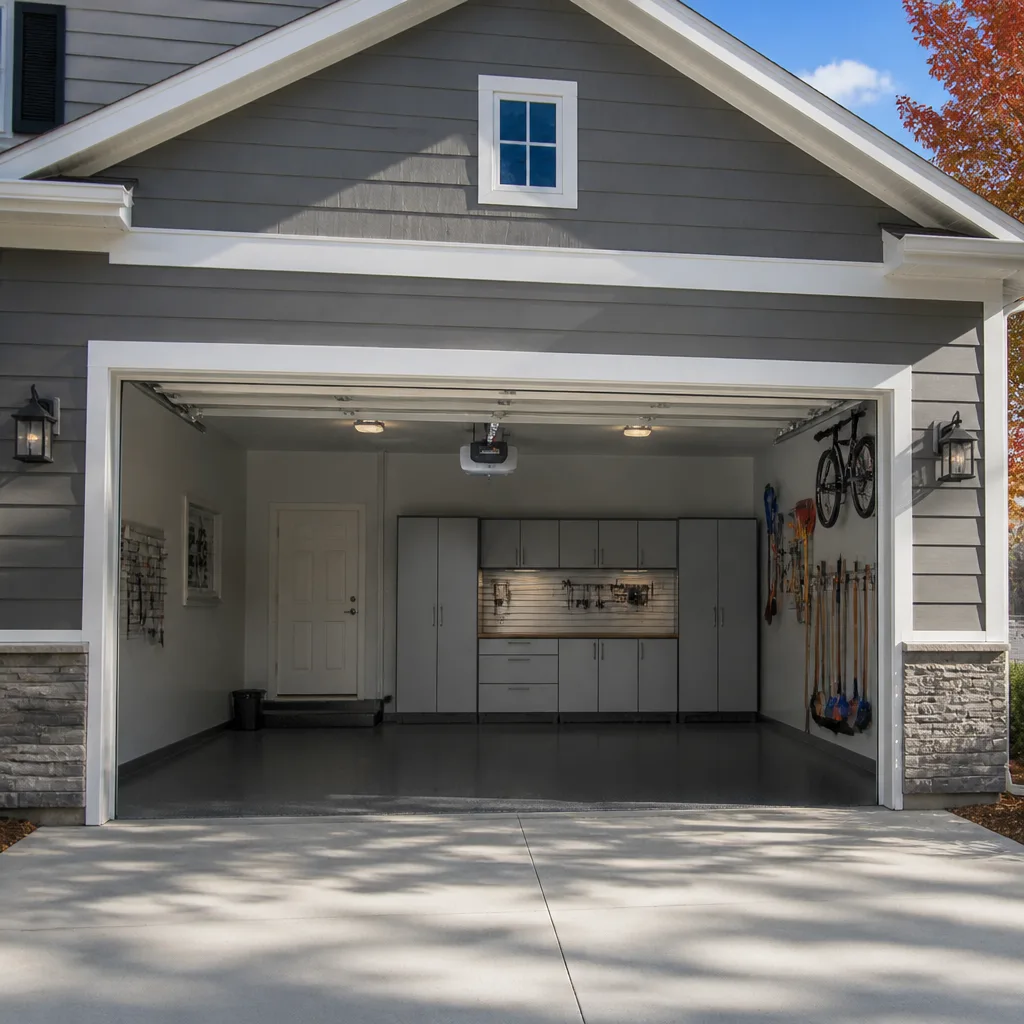 Chamberlain openers
Full 25-point door and opener safety check with every visit - springs, cables, rollers, tracks, and your LiftMaster or Chamberlain opener included
You get a price before we start. It does not change when the pro arrives.
Get your free estimateGarage Door Repair Maintenance Checklist for Lehigh Acres Homeowners
Most garage door maintenance advice you’ll find online was written for a colder climate, and it shows. It obsesses over winter and ice while missing the things that actually wear out a door in Southwest Florida’s heat and humidity. The truth is that the number one cause of early spring failure in Lehigh Acres isn’t age – it’s oxidation that a few minutes with the right lubricant could have slowed. This guide skips the generic manufacturer boilerplate and sequences a maintenance routine around the real failure points local technicians see most, with realistic time estimates and a homeowner-safe way to check your door without ever touching the springs.
Quick Answer
A solid garage door maintenance routine in Lehigh Acres means monthly lubrication of the springs, hinges, and rollers with a silicone-based product, a balance and safety-reverse test every six months, and an annual inspection of cables, weather seals, and opener force settings. The three tasks that prevent the most failures are proper lubrication, a balance test, and promptly replacing worn weather seals before the rainy season.
Styles & brands we work with
- Raised-panel steel
- Carriage house
- Modern flush
- Full-view glass
- LiftMaster openers
- Chamberlain openers
Table of Contents
- Why a Florida-Specific Checklist Matters
- What to Do Monthly, Every Six Months, and Yearly
- The Right Lubricant for High-Humidity Weather
- How to Test Door Balance Without Touching the Springs
- Weather Seal Inspection and the Rainy Season
- What to Photograph Before You Call a Technician
- Opener Care: Force Settings, Safety Eyes, and Batteries
Why a Florida-Specific Checklist Matters
Your garage door has the largest moving parts in your house, and in Lehigh Acres those parts work under conditions that accelerate wear. Year-round warmth means the door cycles more often than in a cold-weather town, since you’re not parking indoors for months at a stretch. High humidity keeps metal components damp, which invites the surface rust that eventually stiffens a torsion spring and shortens its life. And the summer thunderstorm pattern means water intrusion around the bottom seal is a real, recurring problem, not an occasional one.
The failure that catches most homeowners off guard is a spring that lets go sooner than expected. Springs are rated by cycle count, not by years, and a house where the door opens and closes four or five times a day reaches that count faster than one used twice. Add humid air working against the metal and you have a recipe for a snap that strands your car at the worst possible time. A few minutes of maintenance each month is cheap insurance against that call.
Where you live inside Lehigh Acres also shapes what your door faces. Homes near open field edges and drainage areas collect more grit and fine sand in the tracks, which wears the rollers and makes the door run harder. Doors that face the afternoon sun take more heat on the panels and on the opener unit mounted on the ceiling. Pay attention to your specific driveway, not just the general climate, when you decide how often to do each task.
The good news is that a maintenance routine doesn’t require special tools or technical skill. Most of what prevents a breakdown is cleaning, lubricating, and watching for change. The rest – spring tension, cable inspection, anything involving the torsion system – belongs to a trained technician. Knowing where that line falls is the single most useful thing this guide can teach you.
What to Do Monthly, Every Six Months, and Yearly
The simplest way to keep up with garage door care is to divide the work by how often it needs doing. Monthly tasks take under 15 minutes total. The six-month and yearly items take a little longer but come around rarely. Put a reminder on your phone for the first of each month and you’ll never have to think about it again.
Monthly (10 to 15 minutes)
- Wipe down and lubricate the torsion springs, hinges, and rollers with a silicone-based spray. Locate the springs – if they’re mounted above the door on a shaft, they’re torsion springs; if they run along the sides, they’re extension springs. Lubricate the torsion shaft or extension springs only, never the inside coils of a torsion spring.
- Clean the tracks with a damp rag to remove grit and sand. Don’t lubricate the tracks themselves; the door needs to ride freely, and grease in the tracks just attracts dust.
- Look at the bottom weather seal and the side seals for cracks or tears. Press a finger into the rubber – if it feels hard or crumbly, it’s time to plan a replacement.
- Check that the photo-eye sensors near the floor on each side are aligned and free of cobwebs or dirt.
- Listen to the door as it opens and closes. New squeaks, grinding, or a sudden bang are early warnings worth noting.
Every Six Months (30 minutes)
- Run the balance test described further down – disconnect the opener, lift the door halfway, and check whether it holds.
- Test the safety reverse by placing a piece of wood or a roll of paper towels in the door’s path and closing it. The door should reverse immediately.
- Inspect the hinges and rollers for wear; any roller that wobbles or hinge that’s bent should be replaced.
- Check all bolts and lag screws on the hinges and brackets and tighten any that have worked loose from vibration.
Once a Year (45 to 60 minutes)
- Have a technician inspect the springs and cables, since these are the parts that can fail without warning and aren’t safe to assess yourself.
- Test and, if needed, adjust the opener’s force settings according to your model’s manual.
- Replace the opener’s remote battery and clean the wall control contacts.
- Inspect the door panels for dents, rust spots, or separation and touch up any bare metal.
- Check the weather seals at the sides and top, not just the bottom.
If you’d like step-by-step help with any of these tasks, our garage door repair team can walk you through what to look for, or handle the inspection for you.
The Right Lubricant for High-Humidity Weather
The lubricant you choose matters more here than most people realize. In a humid climate, the wrong product can do more harm than good. Grease and heavy petroleum-based lubricants feel effective at first, but they hold onto Florida’s fine dust and airborne grit, turning into a sticky paste that gums up the tracks and accelerates roller wear. Silicone-based spray is the standard for humid regions because it dries to a thin, non-tacky film that repels moisture without collecting debris.
Here’s how the options stack up:
- Best for humid climates: Silicone-based spray lubricant. Dries thin, doesn’t attract dust, protects against the surface oxidation that stiffens springs.
- Good alternative: White lithium grease in a spray can – acceptable for hinges, but it can thicken in cooler weather and attract grit if over-applied.
- Avoid: Heavy wheel-bearing grease, WD-40 used as a long-term lubricant (it’s a solvent, not a lasting protectant), and any product with a thick tacky residue.
- Also avoid: Lubricating the tracks. The tracks should be clean and dry for the rollers to ride smoothly.
Apply the lubricant sparingly. A light coat is all you need on the spring coils (if you have extension springs), the hinge pivot points, and the roller bearings. Wipe off any excess so dust has nothing to stick to. For torsion springs, apply lubricant to the shaft and the bearing plates rather than the tightly wound coils themselves. The goal is a smooth, quiet door that runs with minimal friction and won’t start rusting between services.
If you have a LiftMaster or Chamberlain opener, remember that the opener is only part of the system; the door itself has to move freely for the opener to work properly. Lubricating the moving parts regularly takes strain off the opener motor and extends its life too.
How to Test Door Balance Without Touching the Springs
A door that’s out of balance strains the opener and signals a spring problem before the spring actually breaks. The good news is that you can test balance safely without going anywhere near the springs. Here’s the homeowner-safe version, and it takes about three minutes:
- Close the door completely and pull the emergency release cord (the red handle hanging from the opener rail) to disconnect the door from the opener.
- Lift the door by hand to about waist height, then let go. A well-balanced door should stay where you put it or drift only slightly.
- Lift it to a second position, roughly halfway up, and let go again. It should hold.
- Lift it to shoulder height and let go a third time. A balanced door stays put at all three positions.
- If the door drops quickly or feels very heavy to lift at any point, the springs aren’t doing their share of the work. Do not try to adjust them yourself.
When the door fails this test, it’s telling you something needs professional attention. Weak springs will eventually fail, and a door that’s too heavy can damage the opener. The safe move is to reconnect the opener and schedule a professional inspection of the spring system. Our garage door spring repair specialists handle torsion and extension springs as a dedicated service because this is the most dangerous part of any garage door to work on. A technician can check the tension and replace a worn spring before it snaps unexpectedly.
The key safety point: never wind, unwind, or touch the torsion spring coils or the cables under tension yourself. They store enormous energy, and a wrong move can cause serious injury. Balance testing and lubrication are the safe homeowner tasks; spring adjustment is not.
Weather Seal Inspection and the Rainy Season
Forget the calendar quarters and think in terms of the rainy season. In Lehigh Acres, the pattern is dependable: a wetter stretch in the warmer months when afternoon storms roll through, and a drier stretch later. The time to inspect and replace weather seals is before the wet weather arrives, not after you notice water pooling on the garage floor.
Here’s what to check:
- Bottom seal: Run a hand along the rubber strip at the bottom of the door. If it’s cracked, hard, or leaves gaps when the door is closed, replace it. A gap of even a quarter inch lets water in during a heavy storm.
- Side jambs: Check the weatherstripping on the door frame for tears, compression, or missing sections. This is the most overlooked seal in most homes.
- Top seal: The seal above the door prevents wind-driven rain from getting in. If it’s loose or sagging, it needs attention.
- Threshold: Inspect the door sill at floor level; if it slopes toward the garage instead of away, water pools against the door. A storm threshold can help.
Replacing a bottom seal is a genuinely doable homeowner task on most doors – it’s a matter of pulling the old strip out and sliding a new one into the aluminum retainer. But on doors with severe alignment issues or unusual hardware, a technician can make the job faster and more precise. If your OPENER fine-tunes the door’s bottom position, get the seal replaced first and then adjust the close limit so you’re not fighting the two together. Lehigh Acres homes with doors that face the prevailing storm direction deserve an extra look at the side seals each time you go through the rainy-season check.
See the difference
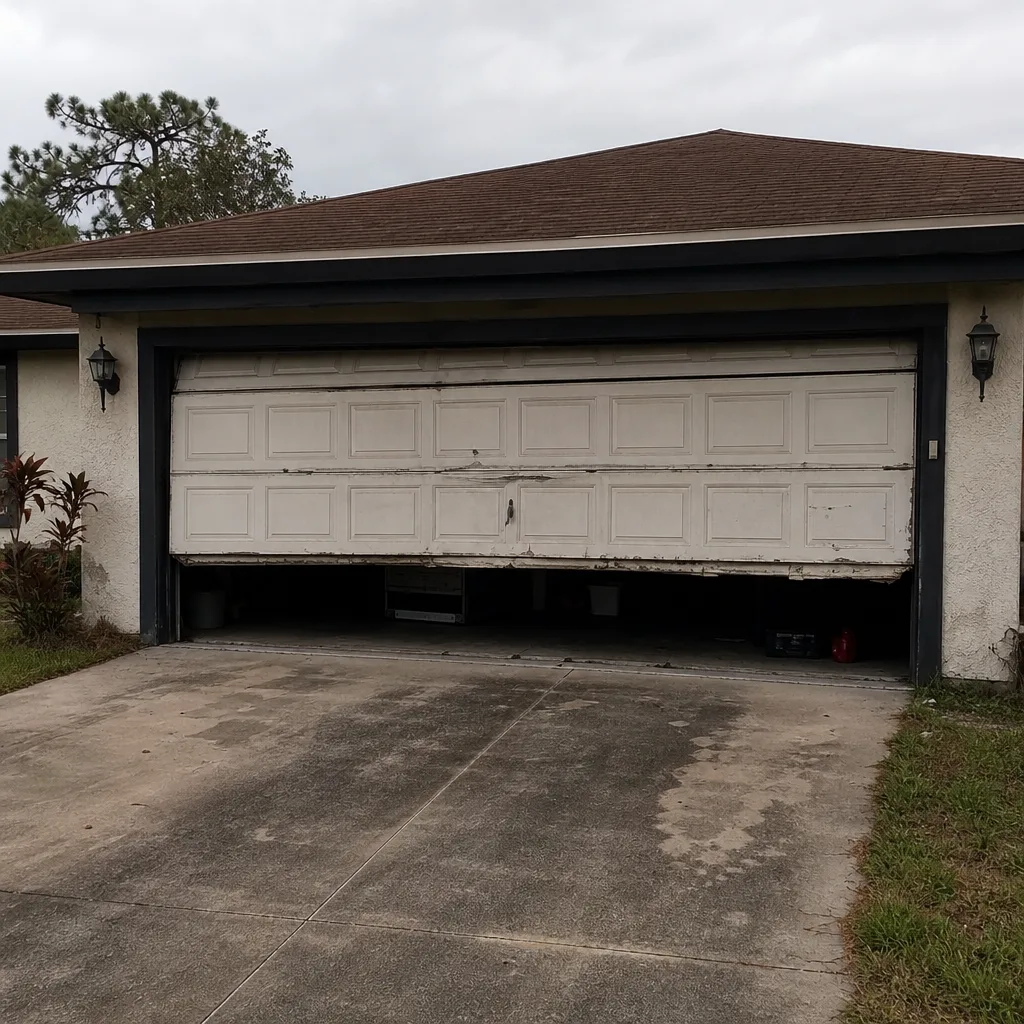 Before
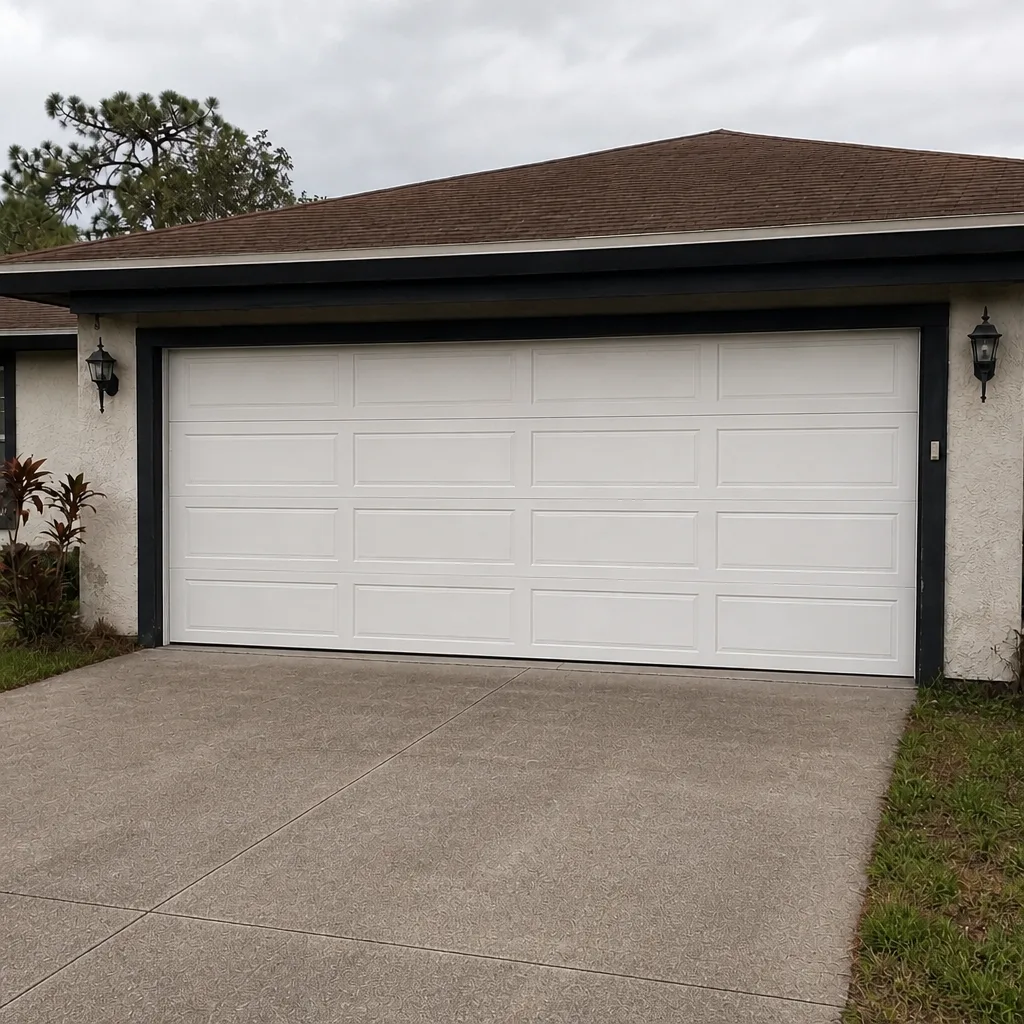 After
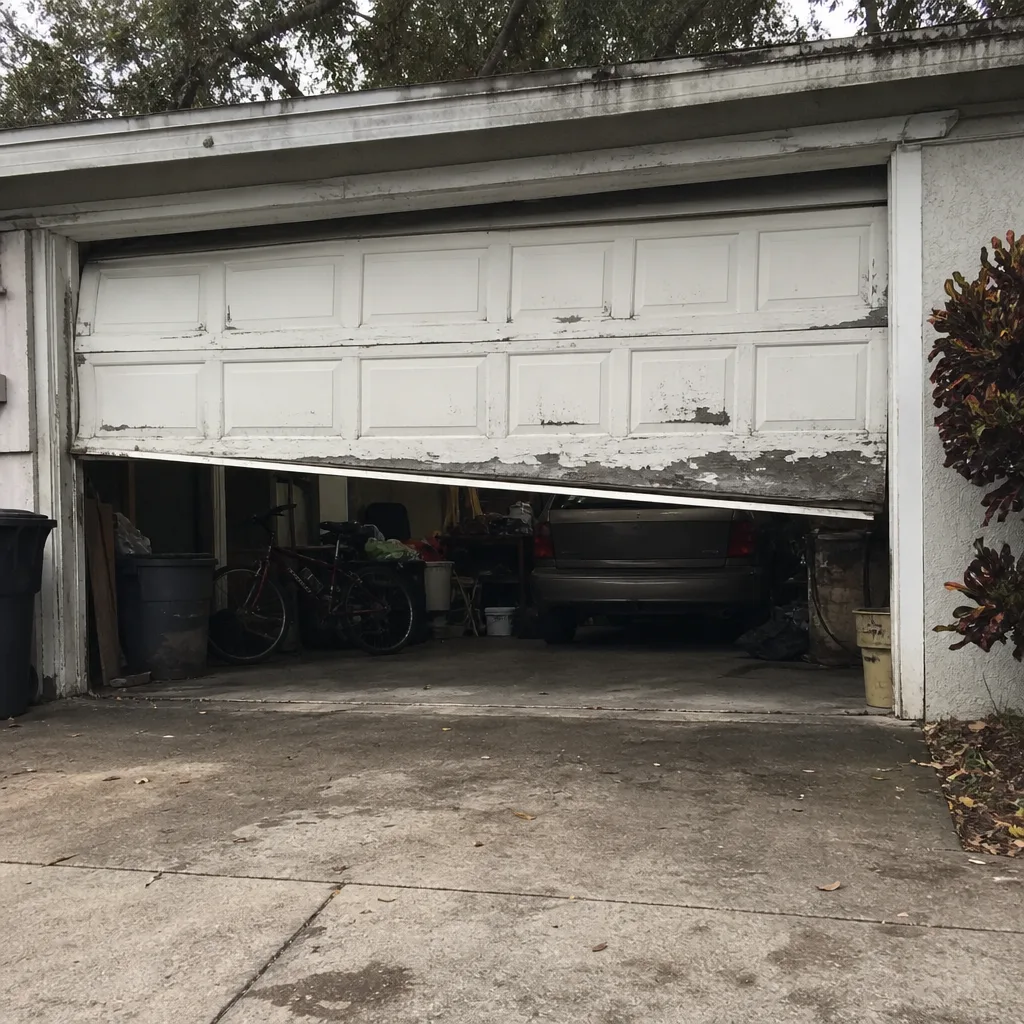 Before
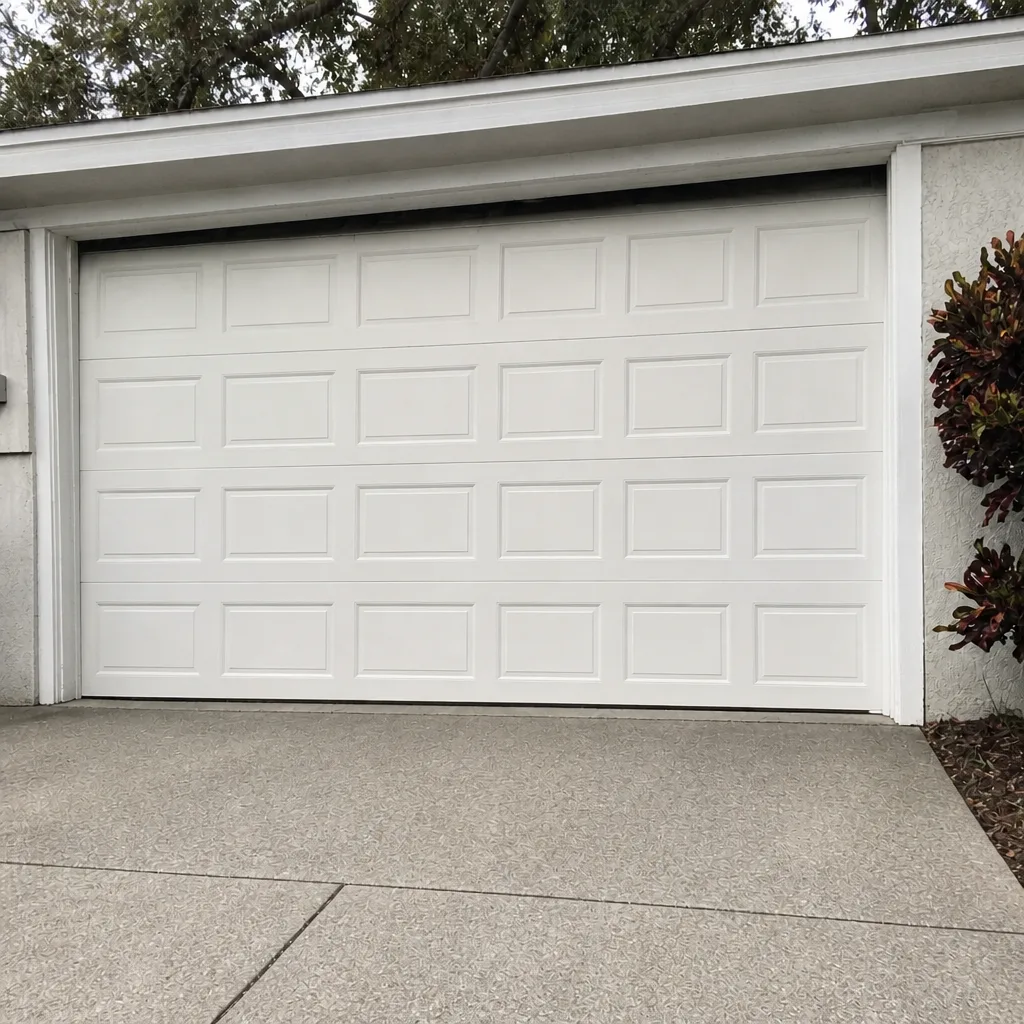 After
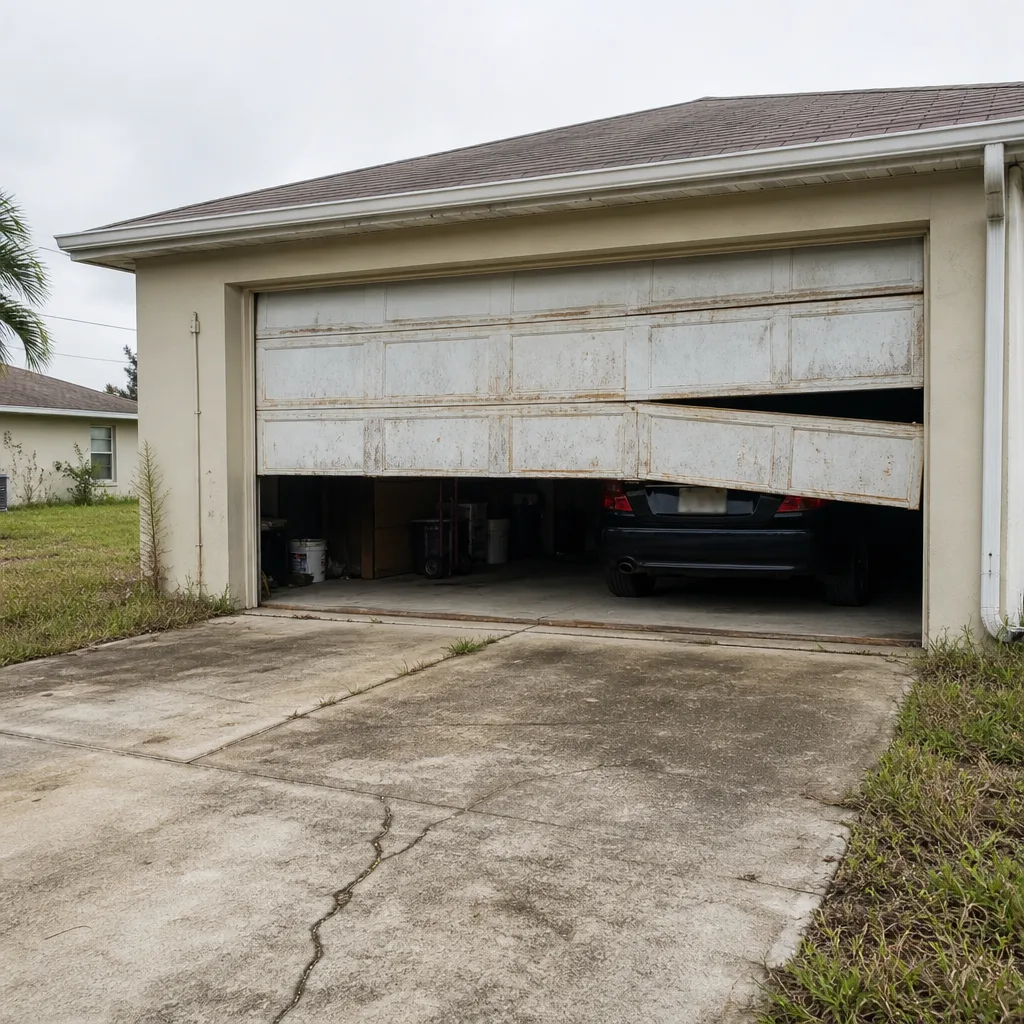 Before
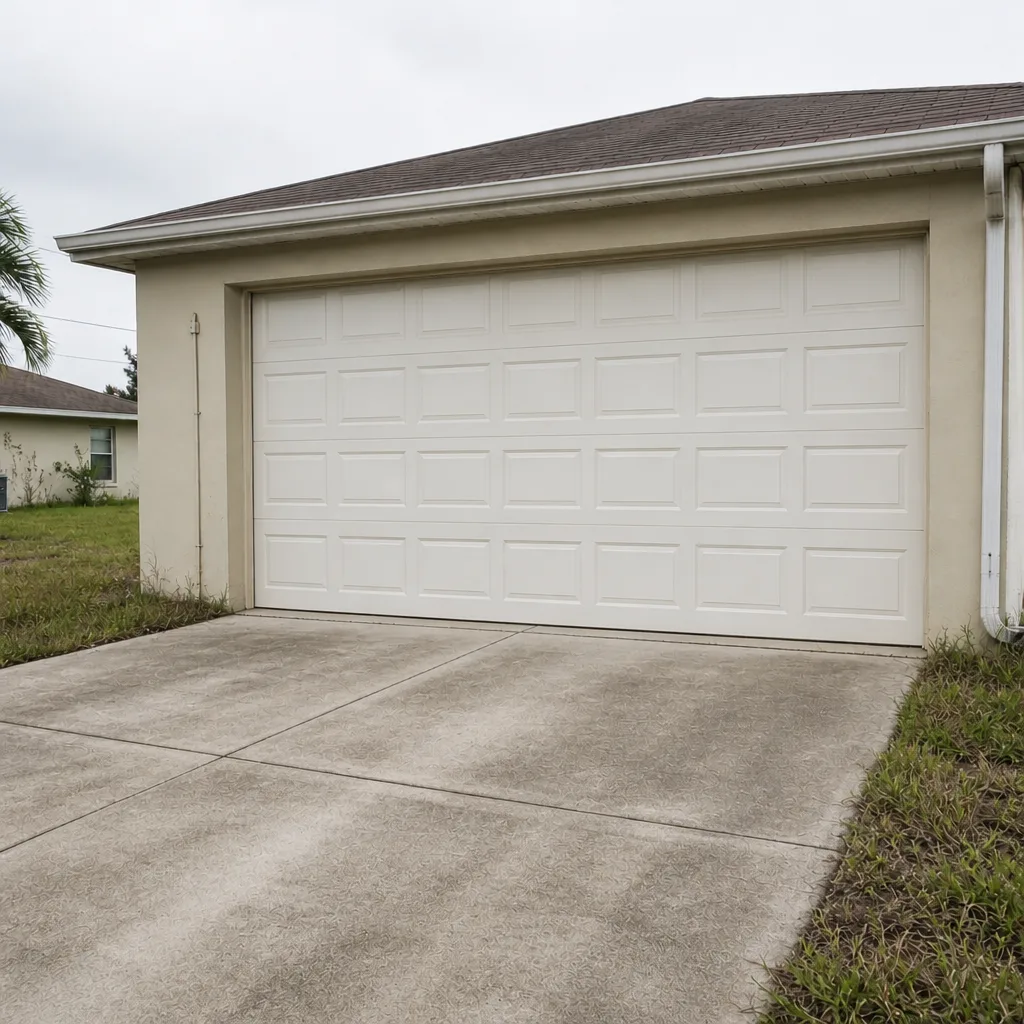 After
What to Photograph Before You Call a Technician
A few photos and notes taken before you pick up the phone can make a service call faster and cheaper. When the tech knows what they’re walking into, they show up with the right parts and don’t have to make a second trip. This is a small task that pays off, and it takes about two minutes.
Document these items:
- The door itself from inside the garage: A wide shot showing the whole door, the springs, tracks, and opener mount.
- The spring assembly: Zoom in on the torsion shaft or extension springs so the technician can identify the type and approximate length. Do not touch the springs.
- The opener brand and model: Look for the label on the back or side of the opener unit – Craftsman, LiftMaster, Chamberlain, and Raynor all label differently, and the model number helps identify parts.
- The problem area: If you see a frayed cable, a broken hinge, or a bent track, get a clear photo.
- The bottom seal: A photo from a low angle shows the gap between the seal and the floor.
- A short video of the door in motion: Record the door operating (if it’s safe to do so) so the technician can hear the noise and see the hesitation.
Write a quick note too: when the problem started, whether it’s occasional or constant, and anything you already tried. When a homeowner calls with a photo of a snapped torsion spring on an unfamiliar brand, our technicians can often identify the make and plan the fix before they arrive. That’s why we work on whatever brand is already on your home – Craftsman, Rainor, LiftMaster, Chamberlain, Clopay, Amarr, Genie, Wayne Dalton, and more – rather than trying to sell you a different system. If you’d like to talk through an issue before booking, our garage door opener repair team can help narrow it down.
Opener Care: Force Settings, Safety Eyes, and Batteries
Your opener does the lifting, but it relies on the door being balanced and the settings being correct. Two simple items keep it reliable. First, the safety reverse test: every six months, place a small object in the door’s path and close the door. If it doesn’t reverse on contact, the safety system needs adjustment. Second, the force settings: in your opener manual, you’ll find instructions for the open and close force. Modern self-learning openers adjust automatically, but older models need manual tuning. If the door reverses for no apparent reason or strains to close, force settings are the usual suspect.
Batteries are easy to forget. Most wall remotes have a small LED that dims or flickers when the battery is low. Replace it once a year regardless. If you have a keypad entry, change its battery on the same schedule so you’re never locked out.
Smart-home-compatible openers, common in newer construction around Lehigh Acres, have access to app-based controls. If you use one of these, test the app’s close function occasionally – some systems notify you when the door is left open, which is genuinely useful. And if your door operates roughly after you’ve lubricated and balanced it, the opener itself may be the issue. Our garage door repair work covers opener repairs alongside the door itself, so you don’t need a separate contractor.
One more habit worth building: watch the door run fully through one complete open-and-close cycle a couple of times a week. Any change in sound or speed is the earliest warning you’ll get that something needs attention. Early detection almost always costs less than a mid-failure emergency call.
Common Mistakes to Avoid
- Lubricating the tracks instead of the springs. Grease in the tracks collects sand and grit, which wears the rollers fast. Keep tracks clean and dry; lubricate the moving parts instead.
- Using WD-40 as a long-term protectant. It displaces water briefly but doesn’t leave a lasting protective film, so humid air wins. Use silicone spray instead.
- Skipping the balance test because the door “still works.” A door that opens and closes but is out of balance is quietly wearing out the opener and spring. Test every six months.
- Ignoring weather seals until the storm arrives. Replace seals before the rainy season, not after water gets in.
- Adjusting spring tension or touching cables yourself. This is the single most dangerous garage door task. If the door feels heavy or the spring looks wrong, stop and call a technician.
- Over-tightening bolts and hinges. Snug, not crushing. Over-tightening can warp hinges and bind the door.
- Calling without a photo or model number. A two-minute photo and a note on the opener model save the technician time and often save you money on a service call.
When to Call a Professional
You should call a professional the moment you notice any of the following: the door is unusually heavy to lift, a spring looks broken or has a visible gap, the door hangs crooked or one side sags, the cables look frayed or loose, or the door slams shut instead of lowering smoothly. Any of these can be a sign the springs or cables need professional attention. A door that’s been in a minor impact – a car bumper, a ladder bump – also deserves a look even if it still operates. And if you’re not comfortable doing the monthly lubrication and balance test, that’s a completely fair reason to call in a technician for a professional inspection.
Lehigh Acres Garage Door Repair Co offers free estimates in Lehigh Acres – call (855) 923-3538. Our technicians have up to 12 years of experience and can service your existing door and opener, whatever brand they are.
Frequently Asked Questions
Lubricate the springs, hinges, and rollers once a month with a silicone-based spray. The high humidity in Southwest Florida makes this more important than in dry climates, and a monthly routine prevents most of the rust and stiffness that leads to early spring failure. Call (855) 923-3538 if you’d like a technician to assess your door’s condition.
Yes, if you use the disconnect-and-lift method described above and never touch the springs or cables. Lift the door by hand to three positions and see if it holds; if it doesn’t, that’s a sign of a spring problem and a reason to call a professional rather than adjust anything yourself.
The safest approach is the one that doesn’t involve touching the spring at all. Lubricate the shaft and bearing plates, keep the coils clean, and let a technician handle any tension adjustments or replacements. Springs carry stored energy that makes them one of the most hazardous components on any door. Our garage door spring repair team handles this work as a dedicated specialty.
Inspect the bottom seal, side seals, and top seal before the rainy season each year, and replace any that are cracked, hard, or leaving gaps. A quarter-inch gap is enough to let water in during a summer storm. If you’re not sure which seal needs attention, call (855) 923-3538 for an estimate.
The local professionals we connect you with are licensed and insured as their state requires, and our technicians have up to 12 years of experience with the most common garage door and opener brands. You can call (855) 923-3538 with any questions about a service before scheduling.
The written estimate you receive sets the final price, and we quote the work before anything starts. If a technician finds something different from what you described, you’ll be told before any additional work is done. Call (855) 923-3538 for a free estimate.
The Bottom Line
Maintaining a garage door in Lehigh Acres isn’t complicated; it just needs the right tasks on the right schedule. Lubricate monthly with silicone spray, run the balance and safety-reverse tests every six months, check your weather seals before the rainy season, and photograph any problem before you call so the service visit is efficient. Keep your hands off the springs and cables – those belong to a trained technician. Do the simple tasks consistently and you’ll catch most problems before they become emergencies. If something feels off, our team at Lehigh Acres Garage Door Repair Co is here to help.
When you need a hand, call Lehigh Acres Garage Door Repair Co at (855) 923-3538 for a free estimate on any repair, opener service, or spring work.
Written by the team at Lehigh Acres Garage Door Repair Co.