Last updated November 21, 2026
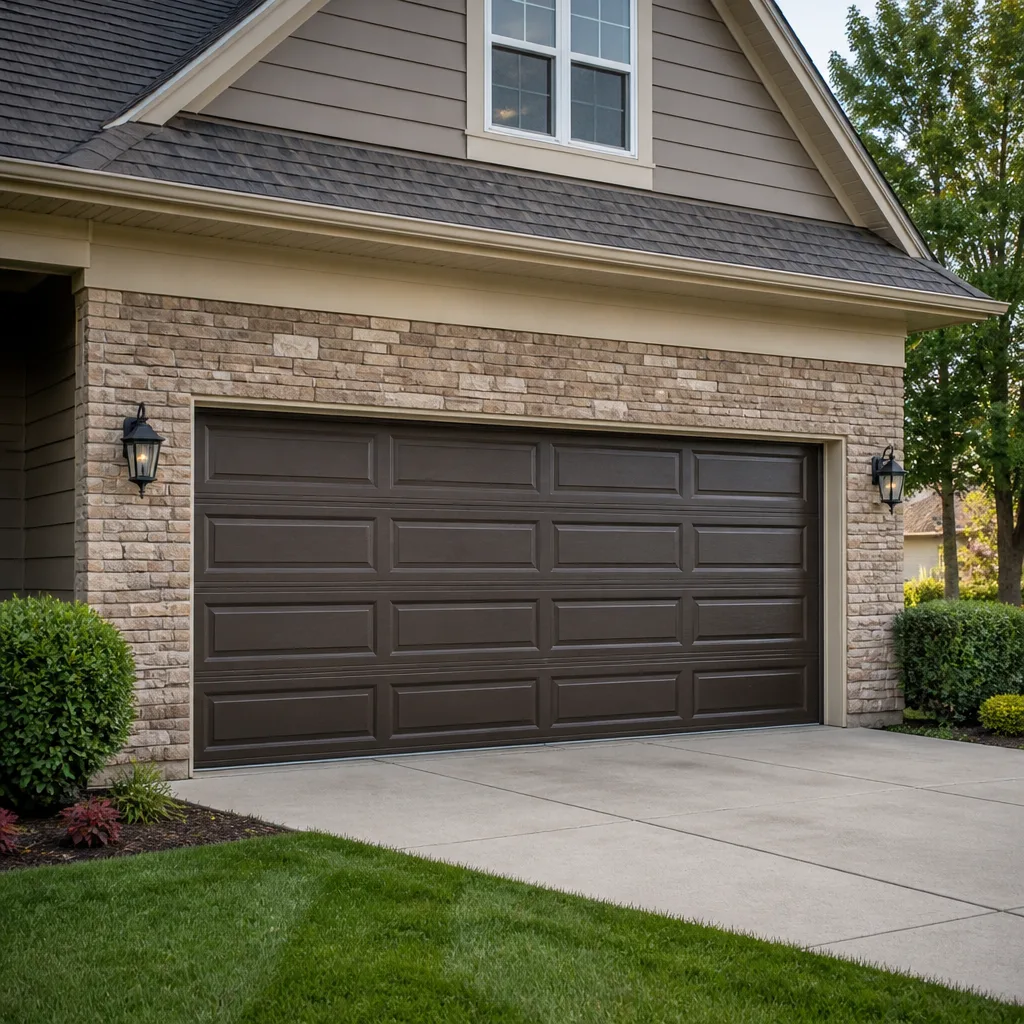 Raised-panel steel
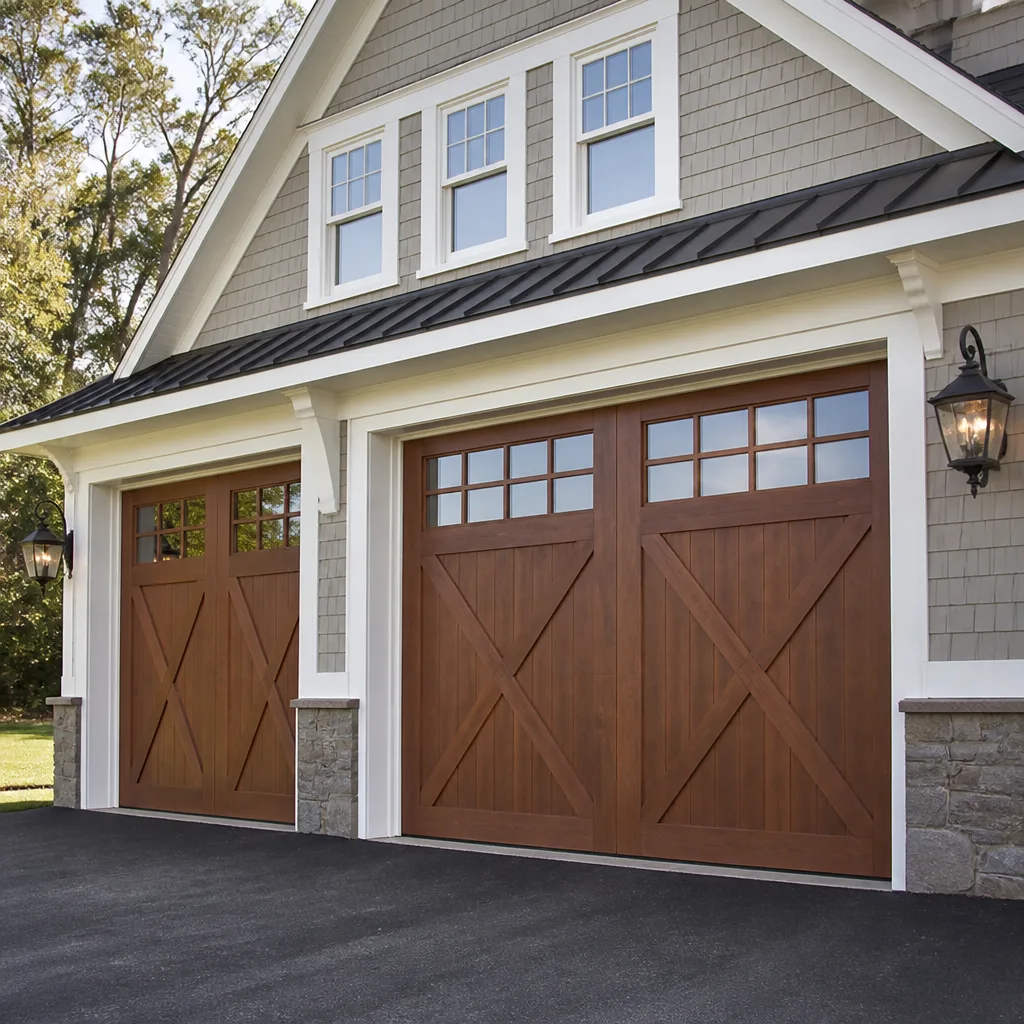 Carriage house
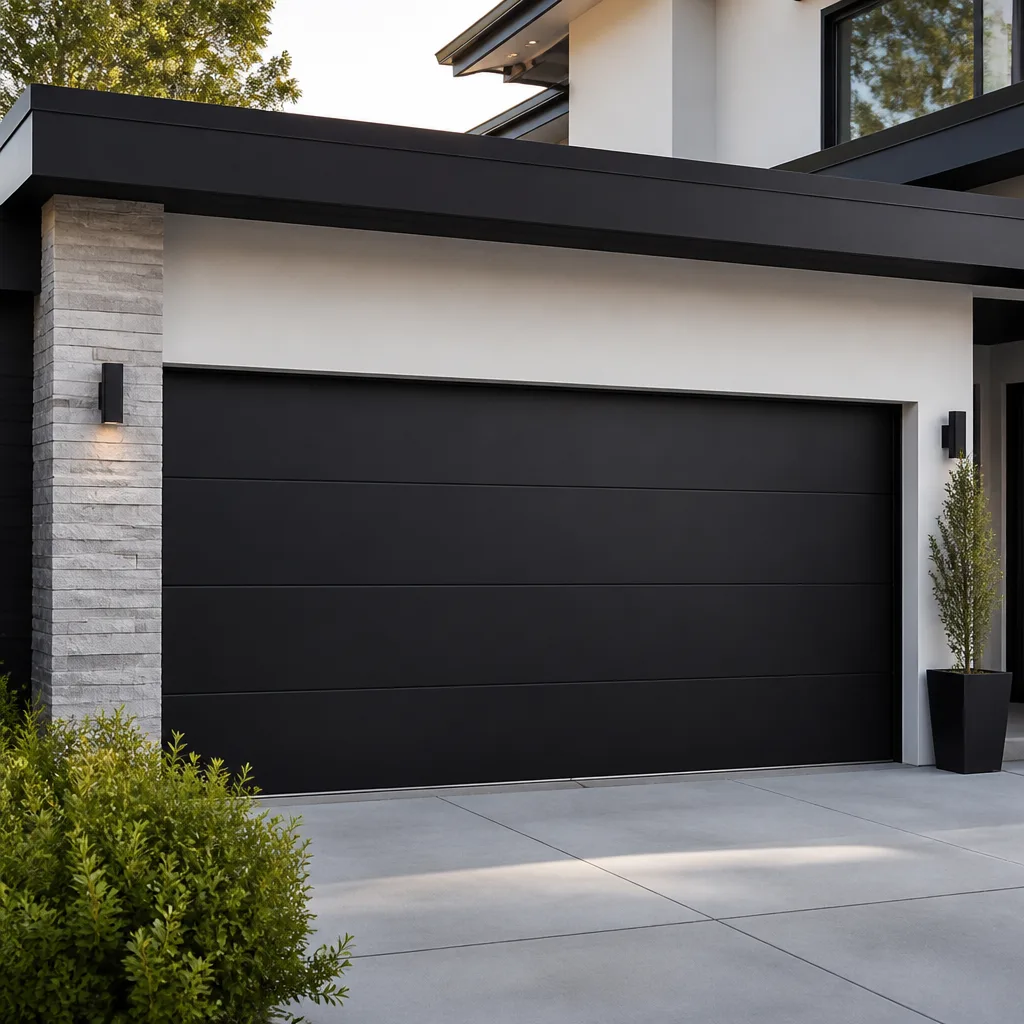 Modern flush
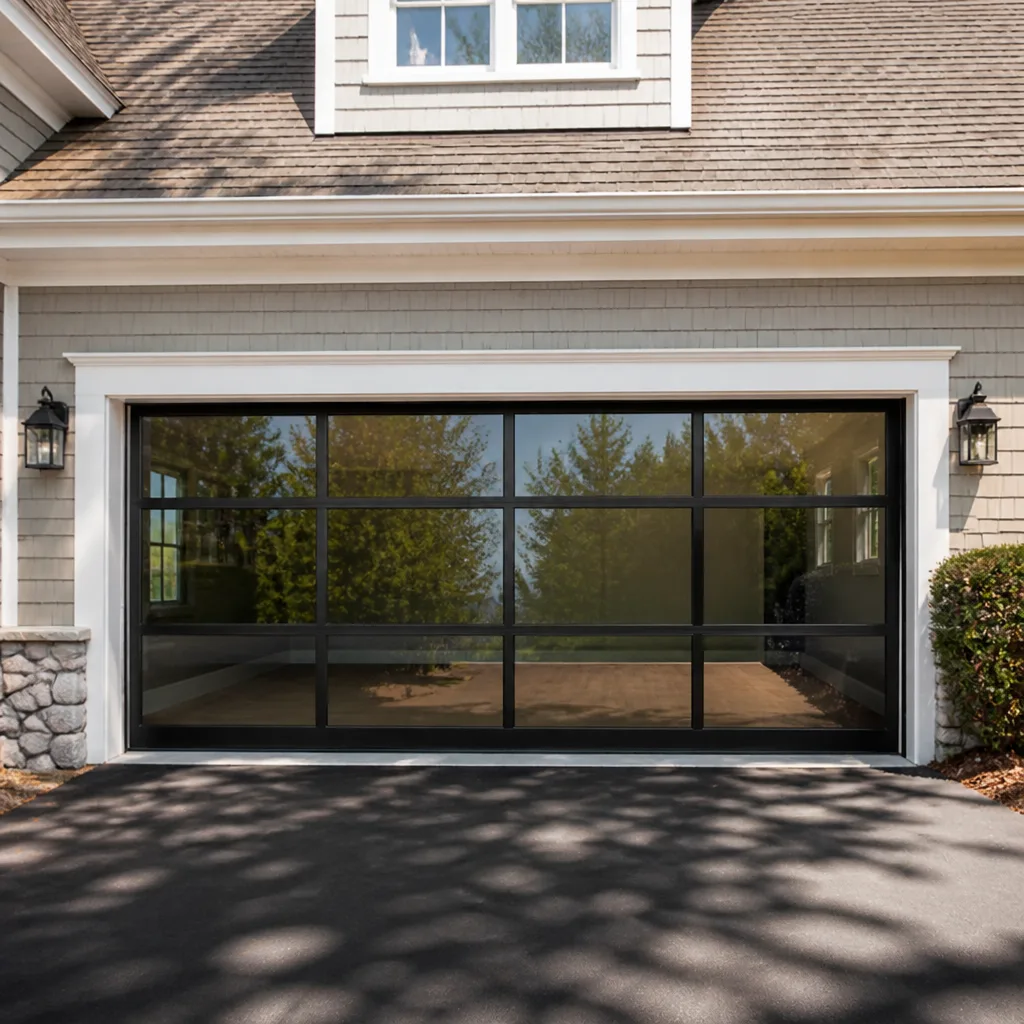 Full-view glass
 LiftMaster openers
 Chamberlain openers
Full 25-point door and opener safety check with every visit - springs, cables, rollers, tracks, and your LiftMaster or Chamberlain opener included
You get a price before we start. It does not change when the pro arrives.
Get your free estimateGarage Door Warning Signs: A Lehigh Acres Homeowner’s Reference Guide
That grinding sound your door makes on a warm, humid morning isn’t the weather. It’s your rollers telling you they have about 60 days left. That’s the part most homeowners get wrong: they wait for the door to stop dead before they call anyone, when the door has usually been sending signals for weeks. Some of those signals are just cosmetic. Others mean a spring or cable is close to failing, and those aren’t things you want to test by pressing the button one more time. This guide walks through the sounds, the visual clues, and the timing question for each one, so you can tell the difference before you’re stuck with a car inside and no way to get it out. We’ll keep the focus on what actually matters in Lehigh Acres conditions.
Quick Answer
Garage door warning signs fall into three buckets: sounds (grinding, popping, squealing, rattling), visual cues (frayed cables, bent tracks, rust streaks, a door that sits crooked), and behavior changes (a motor that hesitates, a door that reverses for no reason). Sounds usually point to rollers or bearings; popping is often a spring or cable under stress; visual cues tell you whether the problem is alignment or structural. Use the timing guide below to decide what can wait a week, what should be scheduled within 48 hours, and what means stop using the door today.
Styles & brands we work with
- Raised-panel steel
- Carriage house
- Modern flush
- Full-view glass
- LiftMaster openers
- Chamberlain openers
Table of Contents
- What Each Sound Actually Means
- Visual Warning Signs by Component
- Response Time: What Waits, What Doesn’t
- Florida Conditions That Speed Up Wear
- How to Describe the Problem When You Call
- A Simple Monthly Inspection You Can Do
- Common Mistakes to Avoid
- When to Call a Professional
What Each Sound Actually Means
The noises a garage door makes are not decoration. Each one comes from a specific part, and the difference between a grinding door and a popping one is the difference between a roller replacement and a spring that’s about to break. Here’s what we listen for when we arrive at a home in Lehigh Acres.
- Grinding: Almost always rollers or the tracks. Metal rollers that have lost their grease, nylon rollers that have worn flat, or a track with debris caught in the channel. Grinding on a door with steel rollers tends to get worse fast once the bearings start to go. Left alone, it can wear the track and turn a $40 part into track work.
- Popping or snapping: This is the one to take seriously. A pop that happens once at the start of travel, then again when the door comes down, often means a cable has jumped a drum or a spring is under uneven tension. If you hear repeated pops during a single cycle, stop and don’t run the door. garage door spring repair is the right call at that point, not because springs fail every time, but because the pop rarely points to anything cheaper.
- Squealing: High-pitched squeals usually come from a dry hinge, a dry bearing plate, or a torsion spring that’s been running without grease. Not dangerous on its own, but a squeal that develops into a grind over a few weeks is a sign the part is going.
- Rattling: Loose hardware: hinges, bolts, the opener rail, or rollers that have come out of their brackets. Most rattle is a tightening job. Some rattle is a sign that the door has been out of alignment for a while.
- Banging or thumping: Usually the opener pulling too hard at the start of a cycle, often because the door is out of balance and the opener is doing work the springs should be doing. That’s a balance problem, and it shortens opener life if you ignore it.
Squeaks and rattles are the door talking about maintenance. Popping and banging are the door talking about stress. Treat those separately. In our experience, the popping call and the grinding call are the same conversation only half the time.
Visual Warning Signs by Component
You don’t need to be a technician to spot a cable that’s about to snap. You do need to know what to look at, and that means ignoring the door face for a minute and looking at the hardware along the sides and above the door.
Cables
A healthy cable is a smooth, uniform steel braid under even tension. A cable that’s about to fail looks different. Watch for fraying on the drum side, wire strands standing out of the braid, a cable that’s become slack on one side, or a coil that’s wound unevenly around the drum. Any of those means the cable is carrying unequal load. On a high-tension cable, that’s not a “wait and see” situation. Call for service and don’t run the door in the meantime.
Tracks
A track that just needs adjustment looks like a slight bend, often near the curve at the top, with the rollers still running smoothly inside it. A track that needs real attention looks like a visible kink, a section pulled out of the wall brackets, or rollers riding outside the channel. A track that’s out of alignment does the door harm with every cycle, so it’s a schedule-this-week problem even when the door still opens.
Springs
Torsion springs sit on a shaft above the door. Extension springs run along the horizontal tracks. Both types can be inspected from the floor without touching anything. A spring with a visible gap, a loose wind, or rust concentrated on the coil is showing its age. A spring that has actually broken will usually show a clear separation and the door will feel extremely heavy when lifted by hand. If you see a broken spring, don’t try to lift the door past a few inches and don’t force the opener to do it either.
Door Face and Panels
Panels that have cracked, dented, or pulled away from their hinges are worth noting, because a damaged panel puts stress on the hardware that moves it. Rust streaks running down the door face point to fasteners that have corroded, and in a brand like Clopay or Wayne Dalton, a vertical line of rust usually sits where a hinge or strut has loosened. Those fasteners are what keep the door square.
The Bottom Seal and Balance Test
Look at the rubber seal along the bottom of the door. It should sit flat against the floor with an even line of contact. If the seal is curled under, torn, or has swollen so much it’s dragging, it’s worn out. For a simple balance check, disconnect the opener (pull the release handle), lift the door halfway by hand, and let go. A balanced door stays roughly in place. A door that drops or rises on its own is out of balance, and the springs are the reason.
Response Time: What Waits, What Doesn’t
Not every warning sign is an emergency, and treating them all like one is expensive. Not treating the serious ones fast enough is worse. Here’s how we sort urgency when a Lehigh Acres homeowner calls us.
Don’t Use the Door Today
- A visible broken spring
- A cable that’s frayed, slack, or jumped the drum
- A door that hangs crooked or lifts unevenly on one side
- Repeated popping during a single cycle
- An opener that moves the door a few inches and then reverses or stops with an odd noise
- A track that has visibly pulled away from the wall
In any of these cases, control the door by hand if you need to get a car out, or wait for a technician. Springs and cables are the parts of a garage door that can cause serious injury when they let go under tension. They aren’t a homeowner repair.
Schedule Within 48 Hours
- Grinding that’s getting worse each cycle
- A door that reverses for no apparent reason (opener safety sensors, or the door binding)
- A motor that hesitates, hums, or runs longer than it should
- Loose or rattling hardware that’s been happening for weeks
- A door that’s noticeably out of balance but still opens
These problems tend to stay problems, but each cycle wears the part down further. Two days of waiting is reasonable. Two months of grinding is not, and it usually costs more when it finally gives.
Can Wait a Week or Two
- Squealing or squeaking
- Loose hinges and bolts
- Worn bottom seal
- Cosmetic dents and scuffs
- Rust on the door face that hasn’t spread to the hardware
None of these threaten the door. All of them are cheaper to fix before they turn into something that does.
Florida Conditions That Speed Up Wear
Garage doors in Lehigh Acres live a different life from doors in drier parts of the country. The combination of heat, humidity, and heavy summer rain does specific things to specific parts. Knowing which parts fail faster here helps you check the right things.
- Rust streaks on the door face: Humidity keeps fasteners and struts wet long enough to rust, and the streaks that run down the door are the visible evidence. Hinges, bolts, and the door’s steel panels are usually where it starts. A Wayne Dalton or Clopay steel door can look fine from the street and still have rust creeping along its hinges and end stiles.
- Swollen bottom seals: That rubber seal along the bottom absorbs moisture over time, and in a Florida summer it swells, curls, and stops sealing cleanly against the floor. A seal that’s dragging is also a signal the door is having to work harder to close.
- Motor hesitation after rain: Openers sit in a hot, humid garage for most of their working lives. A LiftMaster or Chamberlain unit that hums, hesitates, or takes an extra second to start after a stretch of rain is often showing the effects of moisture and heat on its internal parts. It’s worth checking before it stops entirely.
- Stiff hinges and rollers: Heat thins grease and humidity pulls at metal. Hinges and rollers that would last years in a dry climate need periodic lubrication here, and skipping it puts the load back on the opener.
- Sun and heat on the door face: A door facing west takes all-day sun, and that heat can warp panels, fade finishes, and shorten the life of the seal. Panels that develop small cracks in hot weather are showing it.
We work on whatever brand is already on your home. Certified to service Clopay, Amarr, Wayne Dalton, Craftsman, and four other major brands means we’ve seen how each one responds to Florida conditions, and which parts on each tend to go first.
How to Describe the Problem When You Call
The best thing you can do for a faster repair is to describe the symptom accurately when you call. It lets the technician arrive with the right parts, which means one visit instead of two. Here’s what we ask when we take the call.
- Where’s the sound coming from? Above the door (springs, shaft), along the sides (tracks, cables, rollers), or at the opener rail (motor, chain, belt)? “It’s coming from the ceiling above the door” tells us to load spring parts. “It’s coming from the side” tells us tracks and rollers.
- When does it happen? On opening, on closing, or both? A grinding noise only on opening is often a roller issue at the curve. Something that happens only at the last few inches of closing is usually a sensor or seal problem.
- Is it a one-time pop or a repeated one? “It pops once when it starts” is very different from “it pops the whole way up.” Both are worth a visit; only one is worth stopping the door today.
- What’s the door doing? Opening crooked, reversing, stopping short, moving slowly, or not moving at all? Each one points to a different system.
- What brand and model is on the door? Check the opener housing and look for a label on the door itself. LiftMaster, Chamberlain, Genie, and Craftsman each use different parts, and knowing the brand saves us from guessing.
- Is the door balanced? If you’ve done the disconnect-and-lift test and the door drops or rises on its own, say so. That one fact tells us the springs are involved.
- How old does the hardware look? If you bought the home recently and don’t know the door’s history, that’s useful too. Many of the homes we service in Lehigh Acres came with hardware that’s been through a lot of Florida summers.
None of this replaces a technician’s diagnosis, but a good description gets you closer to a one-visit fix on the first call. If your door’s problem turns out to be the opener rather than the door itself, garage door opener repair is a separate, focused job and we handle it the same way.
A Simple Monthly Inspection You Can Do
A five-minute check once a month catches most of the warning signs before they become a call. Here’s the routine we recommend to homeowners in Lehigh Acres. It requires no tools and no lifting of springs.
- Look at the springs. From the floor, check for gaps, rust, or loose winds. Don’t touch them. Just look.
- Look at the cables. Run your eyes down the vertical sides of the door. You’re looking for frayed strands, slack, or uneven winding on the drums.
- Look at the tracks. Check for bends, kinks, or debris stuck in the channel. Make sure the brackets are snug against the wall.
- Check the bottom seal. Open the door, look at the rubber strip across the bottom, and look for tears, curls, or swelling.
- Listen on one cycle. Run the door once and stand in the middle of the garage. Listen for grinding, popping, squealing, or rattling. Note which one it is.
- Watch the door as it moves. It should go up and come down evenly on both sides. If one side lags, you’ve found an alignment or balance problem.
- Test the reverse. Put something solid under the door’s path (a piece of wood is fine) and run the door down. It should reverse on contact. If it doesn’t, the opener’s safety setting needs attention.
If any of these turn up something, write down which one and roughly how long it’s been happening. That single note is the most useful thing you can bring to a call. You can find more on the specific services we cover on our Lehigh Acres Garage Door Repair Co page.
Common Mistakes to Avoid
- Running the door to “test” a broken spring. A broken spring means the opener is trying to lift a door that weighs far more than it can handle. That’s how a $180 spring job becomes an opener replacement too. Stop the door and call.
- Greasing a grinding door and calling it fixed. Lubrication quiets a squeak. It does nothing for a worn roller or a failing bearing, and the grind comes back within weeks. Grease treats the symptom; the part is the problem.
- Trying to re-seat a cable yourself. A cable under tension is more dangerous than a spring in some positions. It’s the single repair we never recommend for a homeowner, and it’s one of the most common reasons people end up needing emergency service in Lehigh Acres.
- Assuming the opener is at fault because the door won’t move. More often, the door is binding on a track or out of balance, and the opener is correctly refusing to force it. Replacing a good opener is expensive and fixes nothing.
- Ignoring a swollen bottom seal through the summer. A dragging seal puts constant resistance on the door’s closing cycle. Left through the wet season, it stresses the motor and can crack the bottom panel.
- Waiting for the door to fail completely before calling. Most of the serious problems in this guide show up weeks before they stop the door. The early warning is the cheapest time to call, and the door still works while you wait for the appointment.
- Assuming the brand on the door means one shop won’t touch it. Any garage door company should work on the brand that’s already installed. If a shop only services one brand, that’s a hardware swap, not a repair.
See the difference
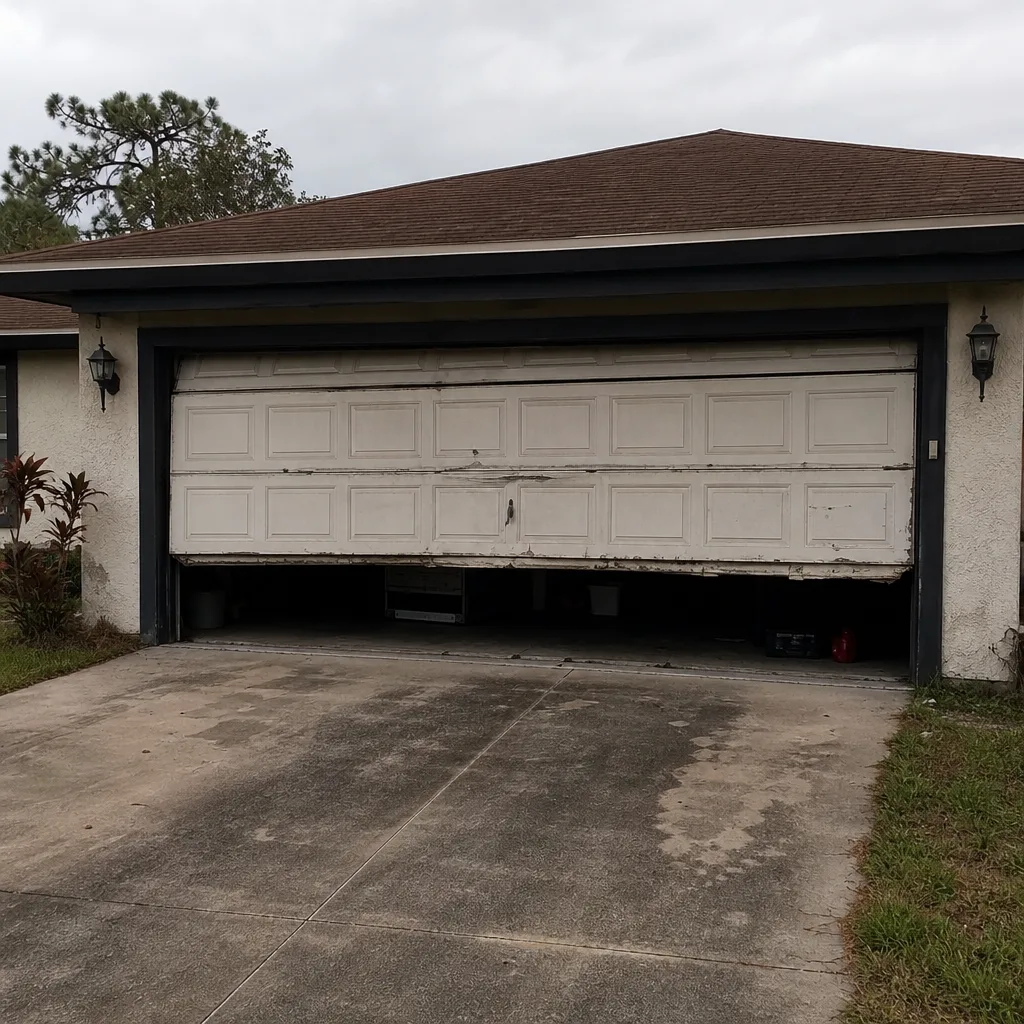 Before
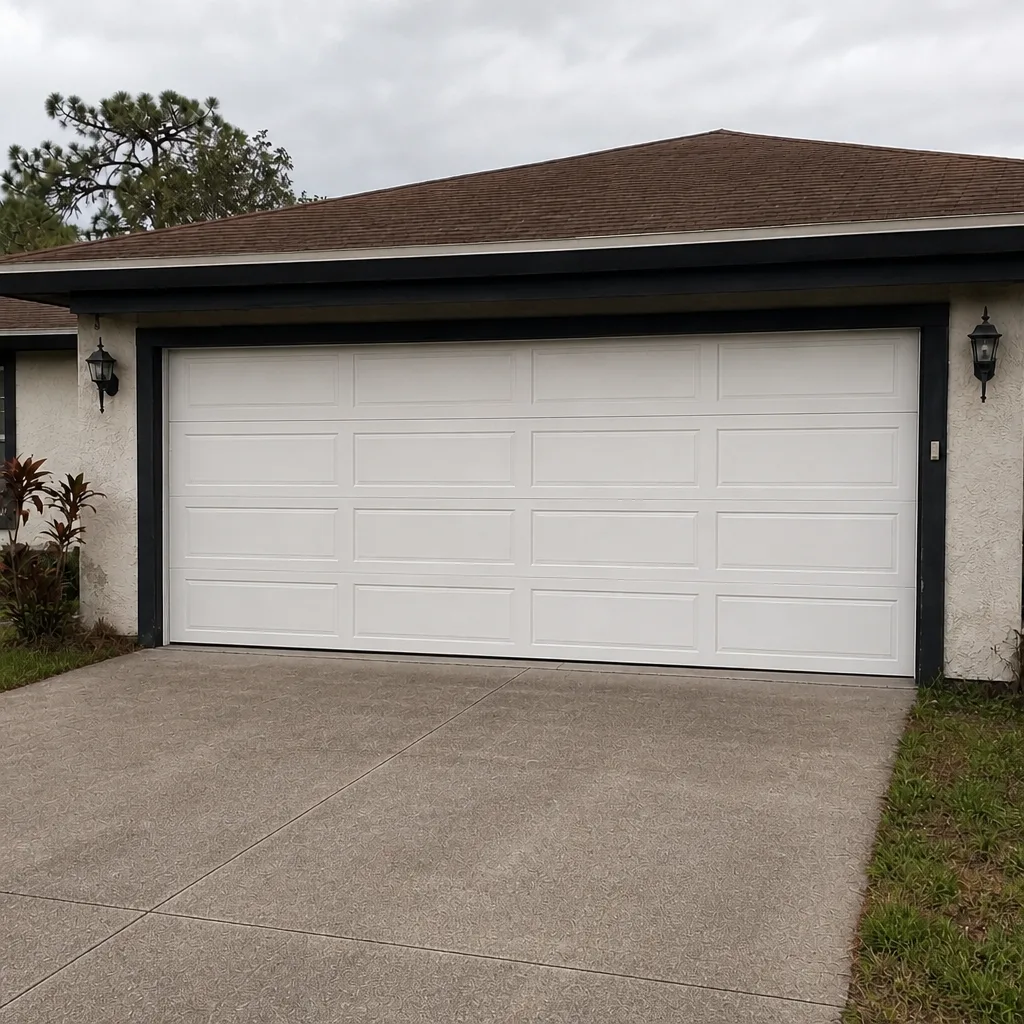 After
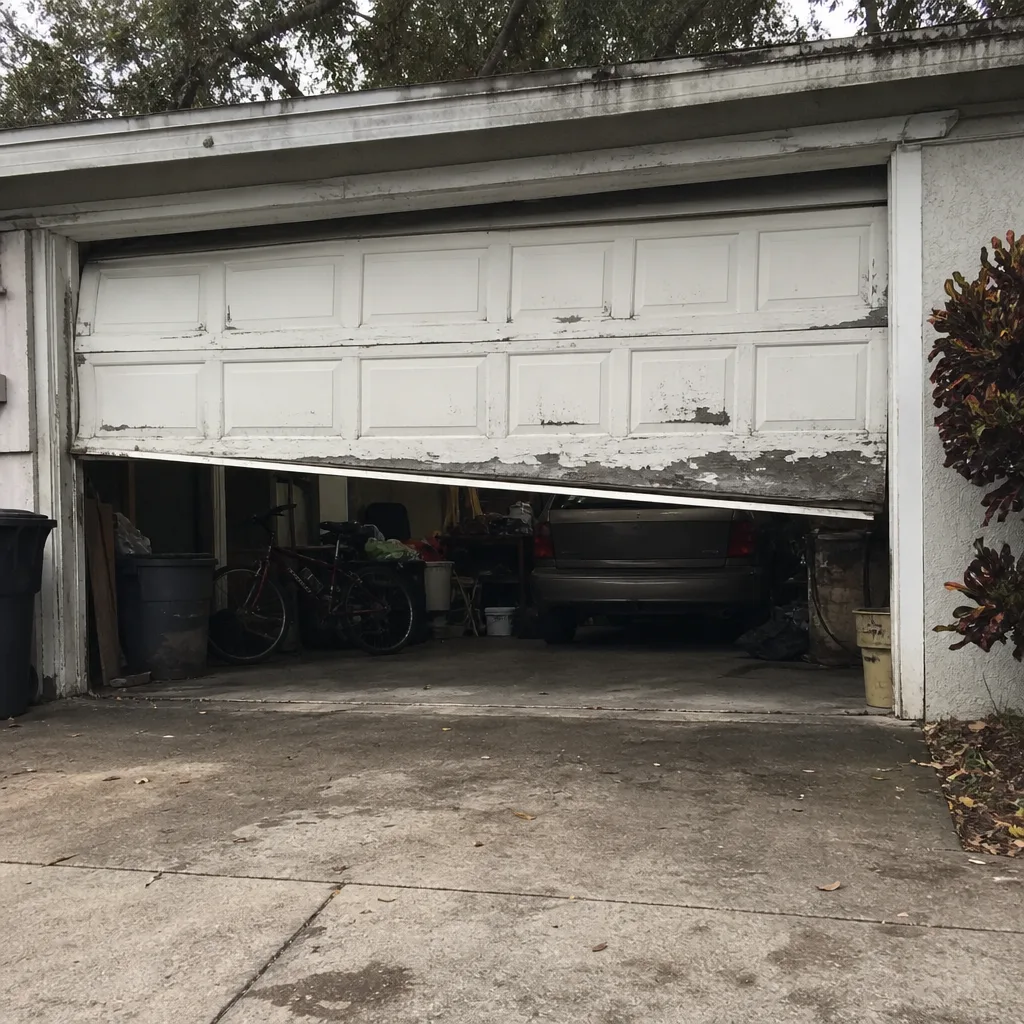 Before
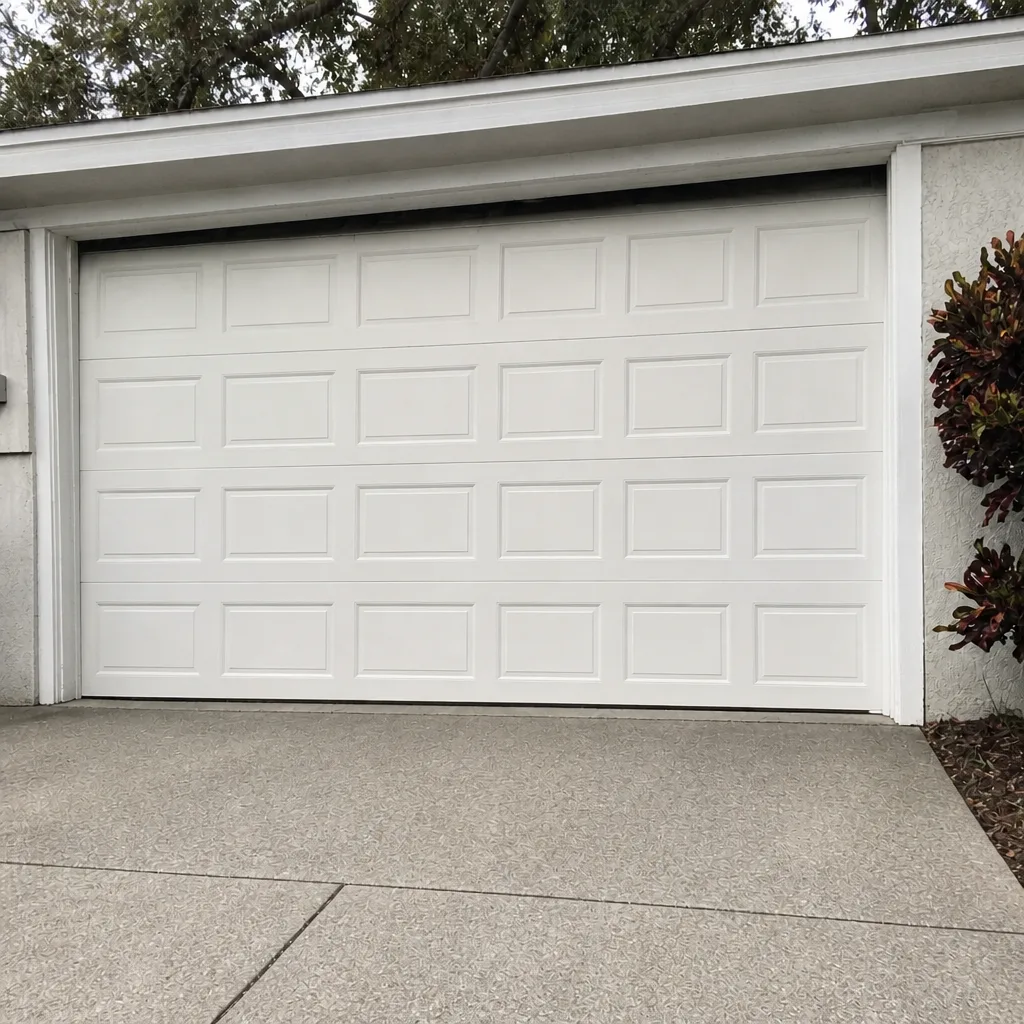 After
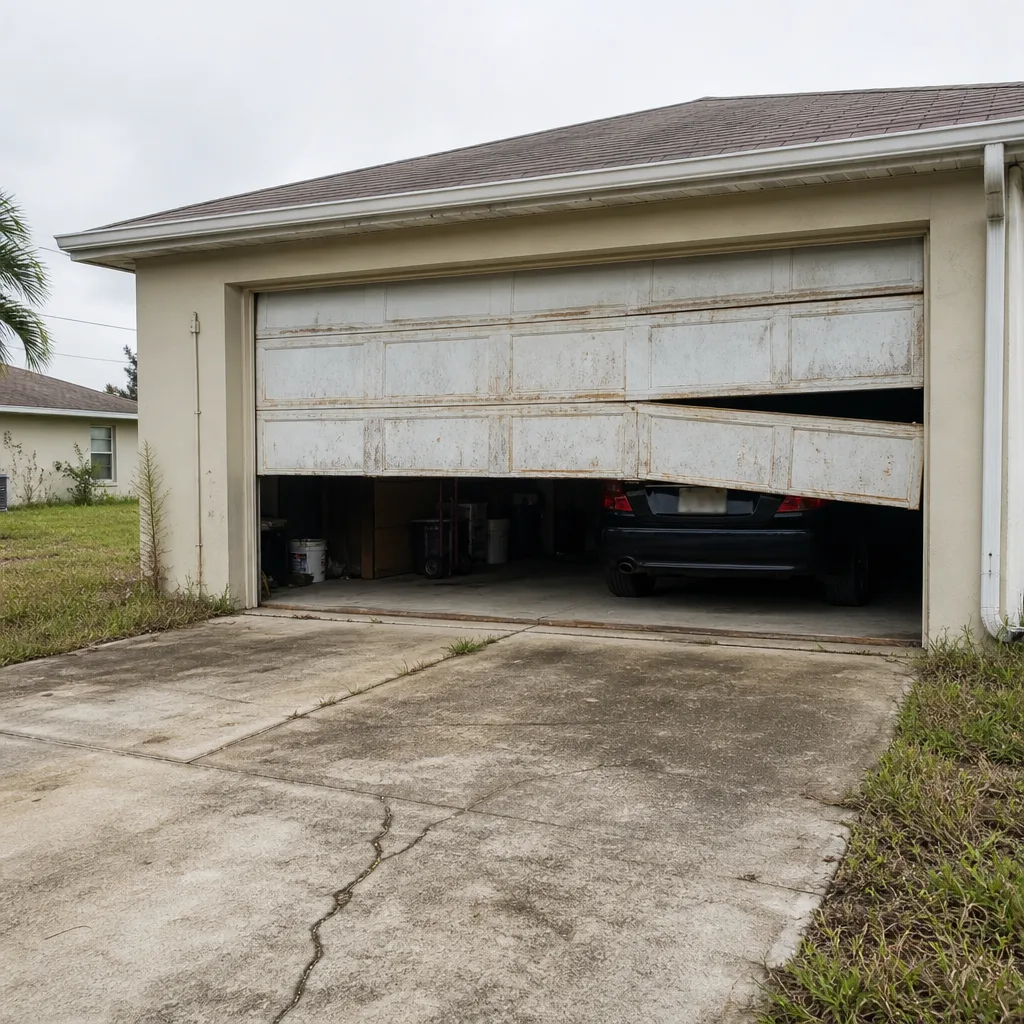 Before
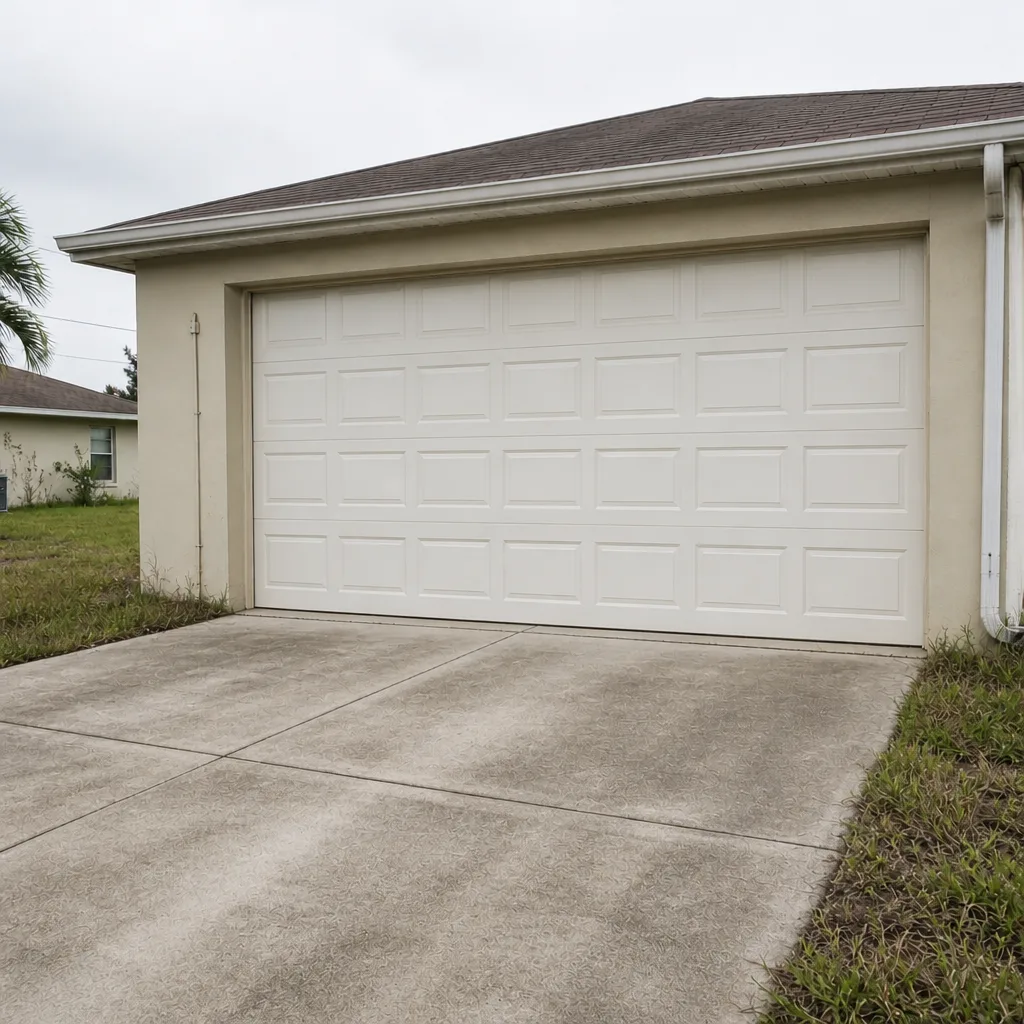 After
When to Call a Professional
Call a professional the moment you see a broken spring, a frayed cable, or a door that hangs crooked. Call within a few days if the door grinds, pops, reverses, or feels out of balance. Call whenever a warning sign has been getting slowly worse instead of better. Springs and cables carry enough stored tension to cause serious injury, and the opener’s safety settings need to be set correctly rather than guessed. Lehigh Acres Garage Door Repair Co offers free estimates in Lehigh Acres, and we handle the full range of repairs to replacement work, including garage door repair for doors that have already stopped. Call (855) 923-3538 and describe what you’re seeing. Our technicians have up to 12 years of experience, and they’ll tell you what’s actually wrong rather than what’s most profitable to fix.
Frequently Asked Questions
The most common warning signs we see in Lehigh Acres are grinding from the rollers, rust streaks running down the door face, a swollen or dragging bottom seal, and an opener that hesitates during humid stretches. Popping or banging sounds are less common but more serious, because they usually point to a spring or cable under stress. Call (855) 923-3538 for a free estimate.
No. Stop using the door if it pops more than once during a single cycle. Repeated popping usually means a cable has jumped a drum or a spring is under uneven tension, and forcing the door risks a dangerous failure. Call (855) 923-3538 and describe when the pop happens. Estimates are free.
Squeaks and rattles can usually wait a week or two. They come from dry hinges, loose bolts, or worn rollers, and none of those disable the door. Schedule the visit when it’s convenient, but don’t let it run for months. Call (855) 923-3538 for a free estimate.
A cable that needs replacing shows frayed strands, slack, or uneven winding on the drum, while a track that needs adjusting looks like a slight bend near the curve with the rollers still running smoothly inside. A frayed cable is a stop-the-door problem. A bent track is a schedule-this-week problem. Call (855) 923-3538 and tell us which one you’re seeing.
Summer heat thins grease and humidity works on metal, so hinges, rollers, and cables take more wear during the hot months. If the door sounds worse in July than it did in January, that’s seasonal wear rather than something new. Call (855) 923-3538 for a free estimate on tightening and lubricating the hardware.
Yes. Any reputable garage door company can service the brand already on your home without asking you to swap it out. We’re certified to service eight of the most common brands, including Clopay, Amarr, Wayne Dalton, and Craftsman. Call (855) 923-3538 and tell us which one you have.
The Bottom Line
Garage doors don’t fail silently. They grind, pop, squeal, rattle, and drift out of balance first, and most homeowners just don’t know which sound means which problem. This guide gives you the pattern: grinding means rollers, popping means springs or cables, visual rust and swollen seals mean moisture, and a door that reverses or hesitates means the opener or the balance. Use the timing guide to decide how fast to act. Stop the door today for springs, cables, or a crooked door. Schedule within 48 hours for grinding or reversing. Wait a week or two for squeaks and rattles. The door will tell you what’s wrong. You just have to know how to listen.
Written by the team at Lehigh Acres Garage Door Repair Co.