Last updated November 21, 2026
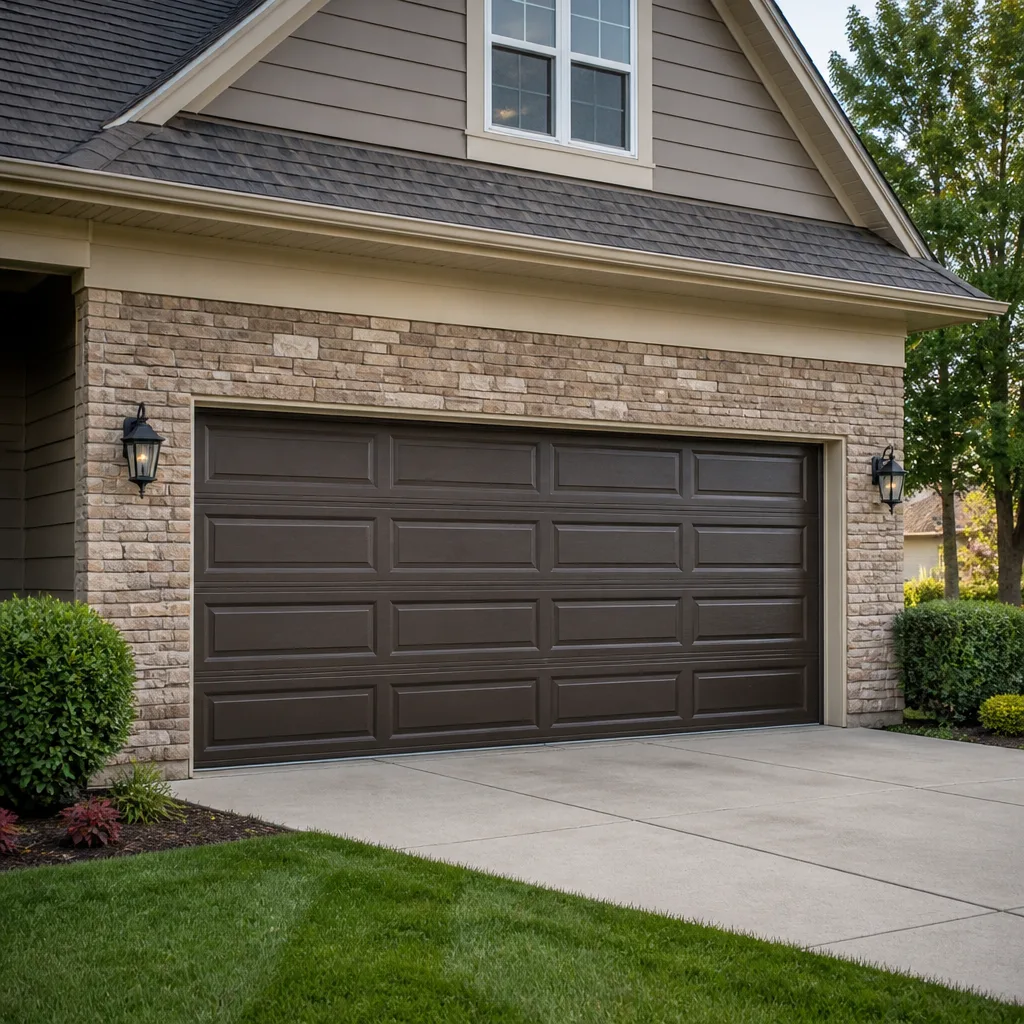 Raised-panel steel
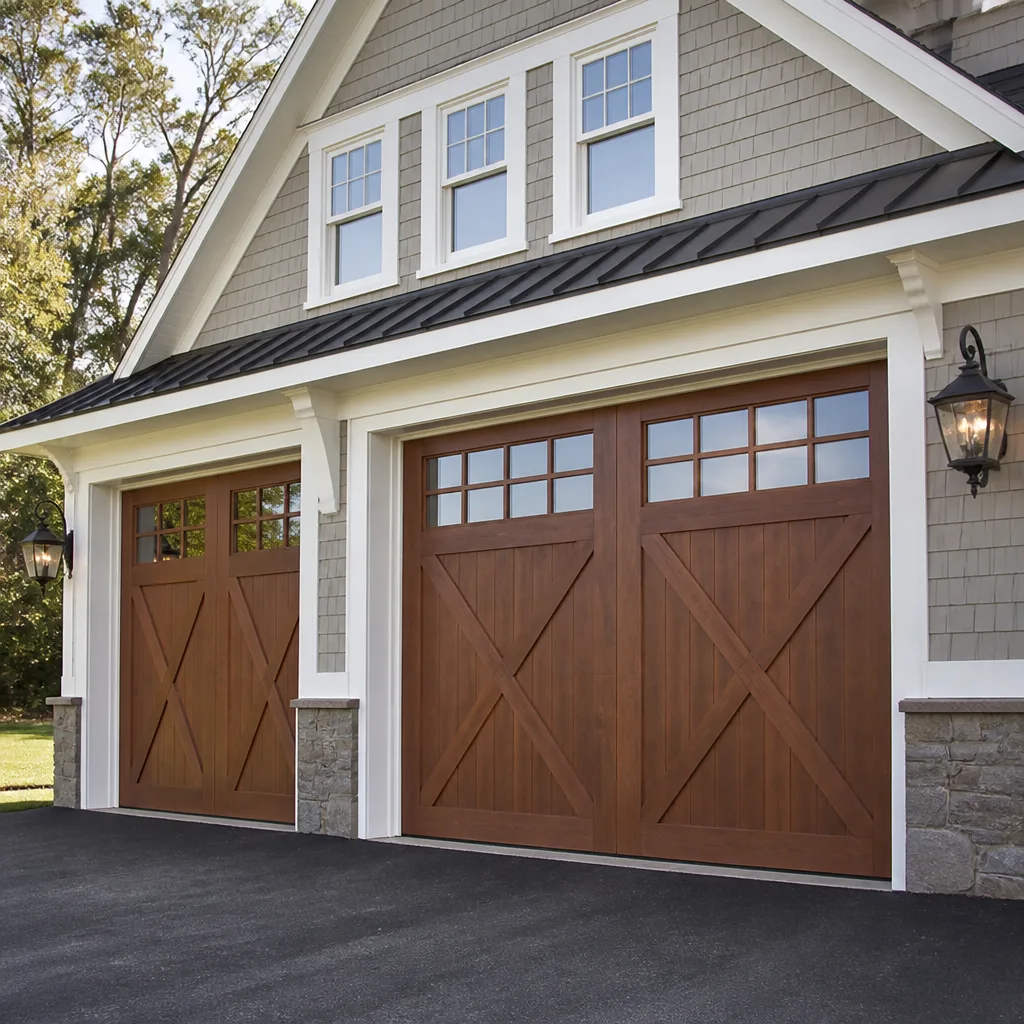 Carriage house
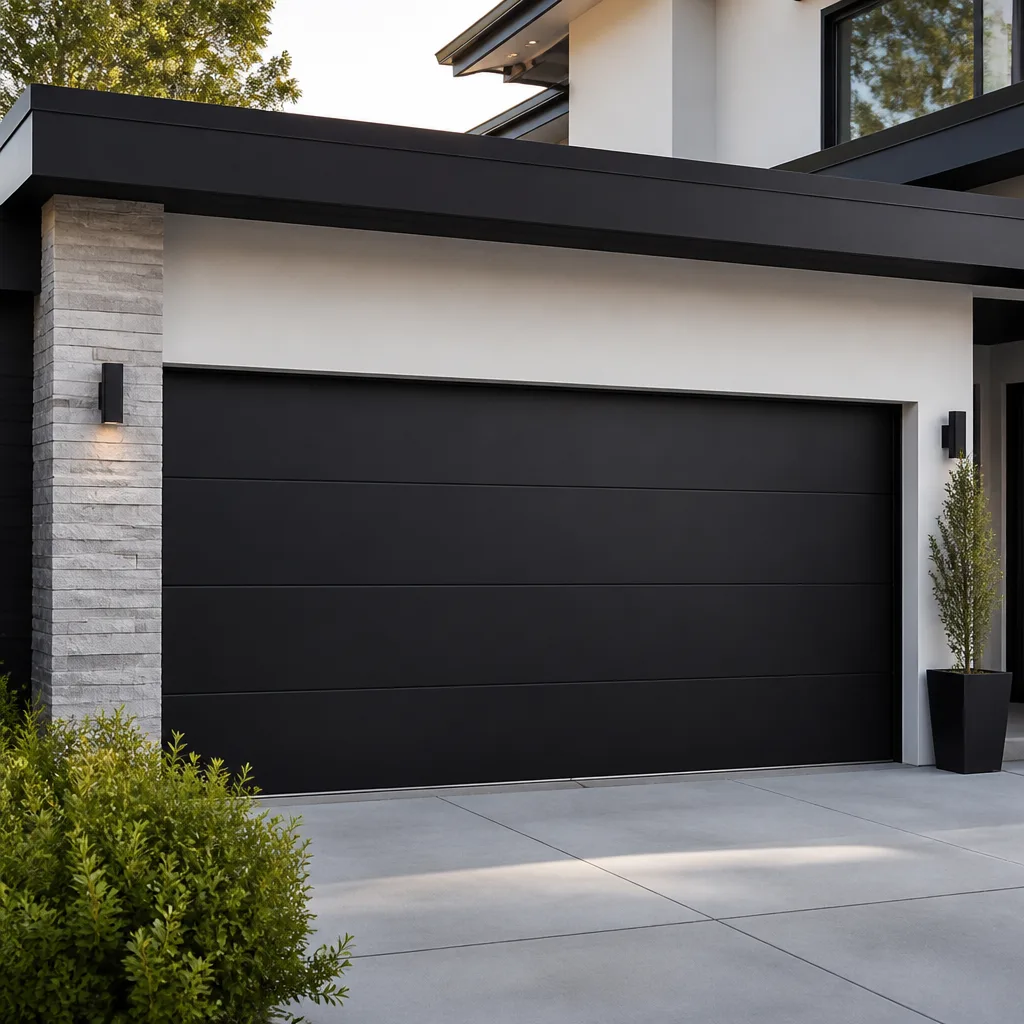 Modern flush
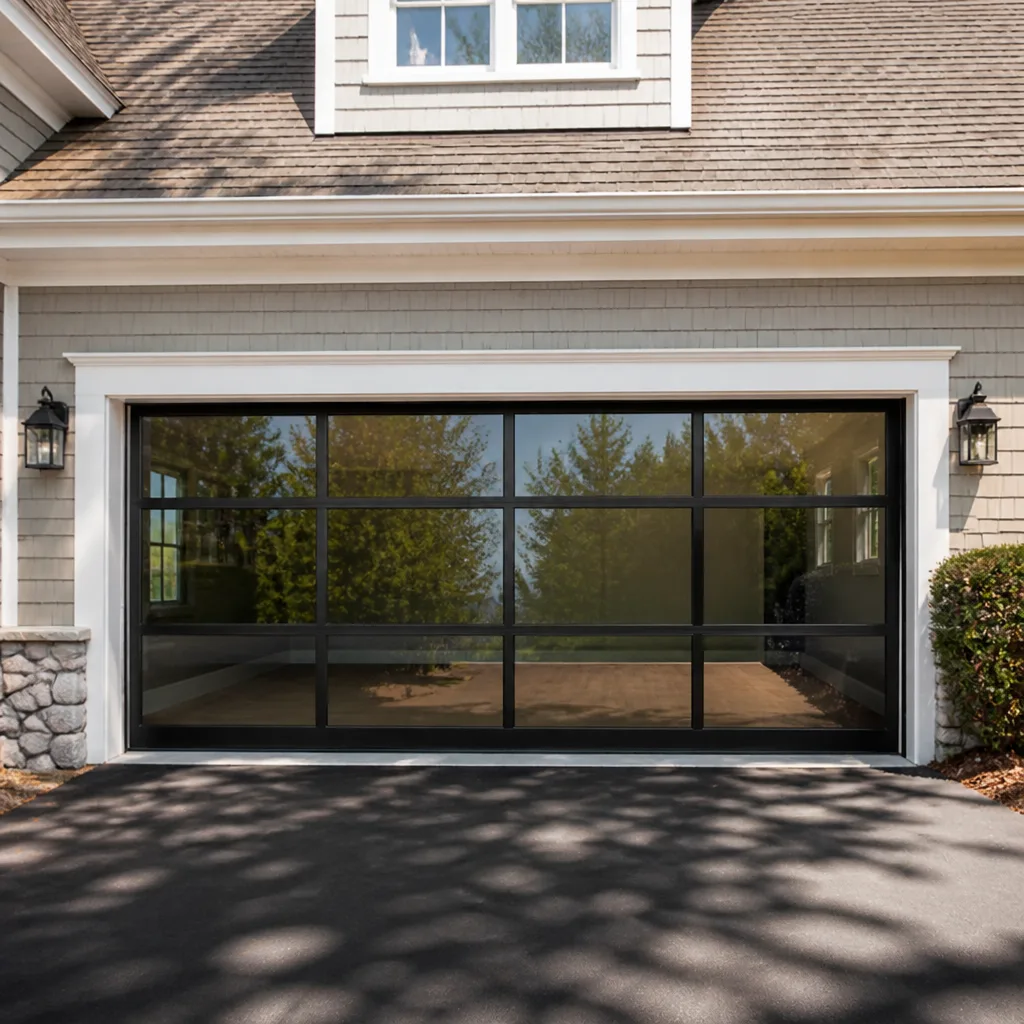 Full-view glass
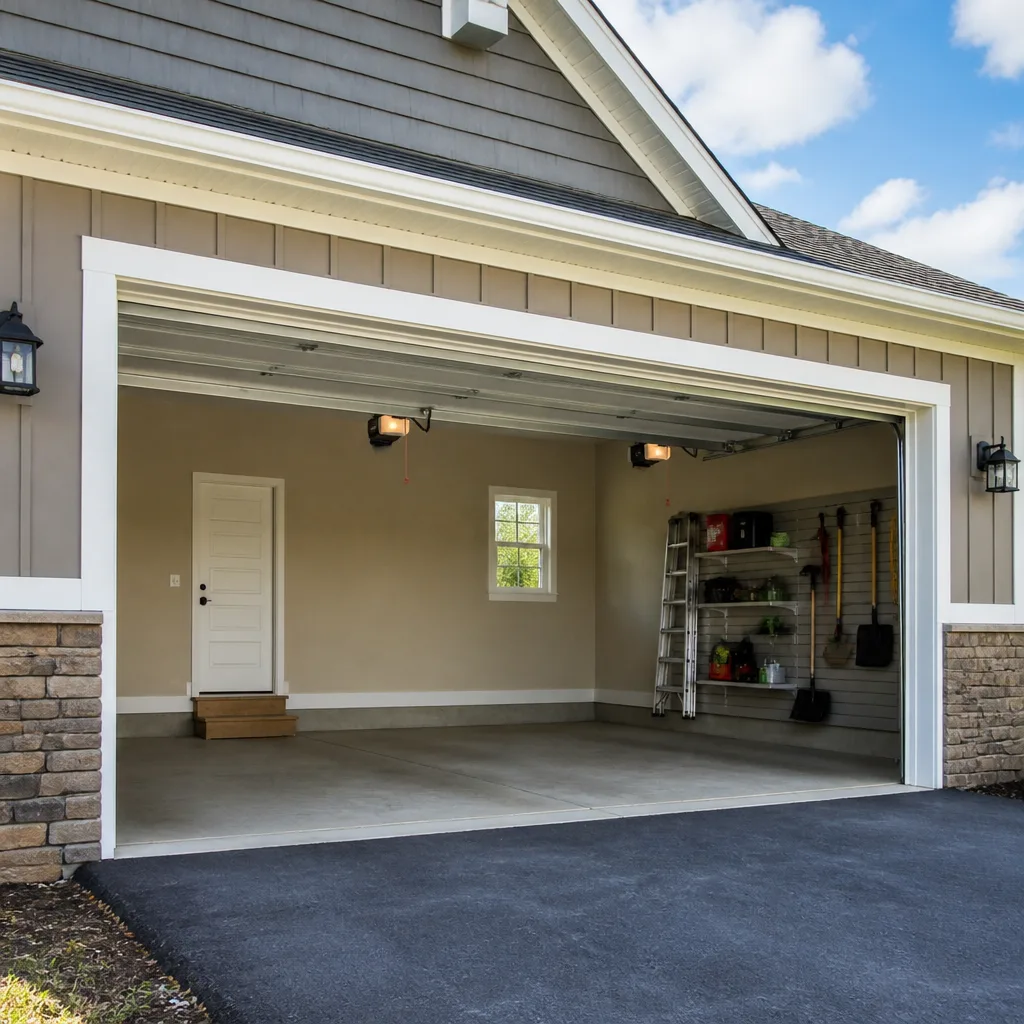 LiftMaster openers
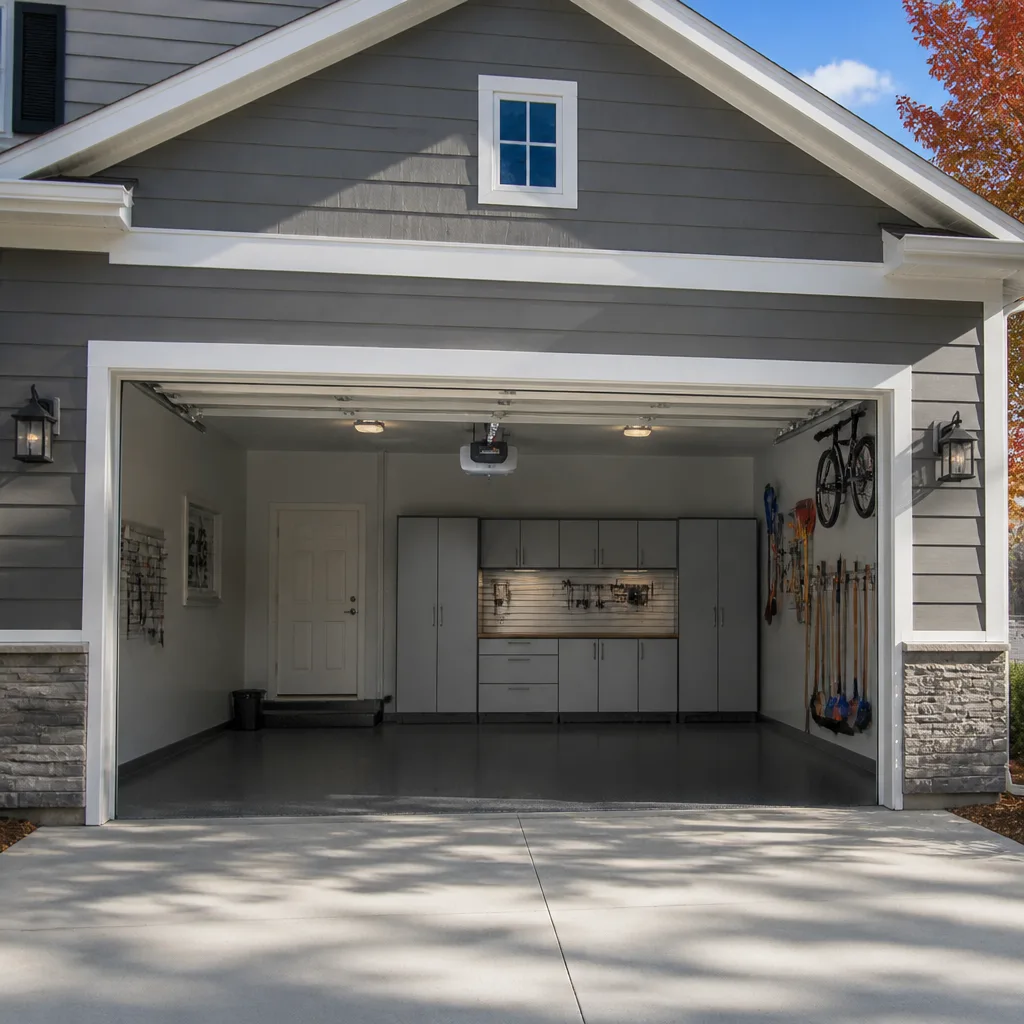 Chamberlain openers
Full 25-point door and opener safety check with every visit - springs, cables, rollers, tracks, and your LiftMaster or Chamberlain opener included
You get a price before we start. It does not change when the pro arrives.
Get your free estimateGarage Door Repair Troubleshooting in Lehigh Acres: Common Problems and How to Fix Them
A door that reverses before it reaches the floor is the single most misdiagnosed garage door problem we encounter. Most homeowners assume the safety sensors are at fault and start cleaning lenses or bending brackets. More often, the real culprit is a travel limit switch set slightly off or a force setting that trips too easily, and the sensor adjustment does nothing because the sensors were never the issue. Getting the diagnosis right first saves you time, parts and frustration. This guide maps the problems Lehigh Acres homeowners actually face to the component most likely causing them, so you know whether a screwdriver is the right tool or whether it’s time to call someone.
Quick Answer
Most garage door failures fall into five mechanical categories: springs, cables and rollers, the opener’s logic board or motor, travel and force settings, and physical damage to panels or tracks. Diagnosing which category you’re dealing with tells you whether the fix is a safe DIY adjustment or a job for a technician. In Lehigh Acres, humidity and the daily heat cycle wear specific components faster, so the symptom you see often points to an earlier problem than it would elsewhere.
Styles & brands we work with
- Raised-panel steel
- Carriage house
- Modern flush
- Full-view glass
- LiftMaster openers
- Chamberlain openers
Table of Contents
- Opener-Side vs. Mechanical-Side Failures: Knowing the Difference
- Spring Problems: The Hard Stop for DIY Repair
- Cables and Rollers in Lehigh Acres Humidity
- Travel Limits and Force Settings: The Safe DIY Ceiling
- Noise Diagnosis: Grinding, Squeaking and Rattling
- When a Door That “Works Fine” Signals Imminent Failure
- Working With the Brand You Already Have
- Common Mistakes to Avoid
- When to Call a Professional
Opener-Side vs. Mechanical-Side Failures: Knowing the Difference
The most useful troubleshooting skill is separating problems that live inside the opener from problems in the door and its hardware. Symptoms overlap constantly, but the fixes are completely different, and chasing the wrong side costs money.
Opener-side failures involve the motor, the logic board, the wall control, the remote or the safety sensors. Mechanical-side failures involve springs, cables, rollers, hinges, the track and the panels themselves. A door that hums but won’t move could be a stripped gear in the opener or a broken spring, and those two repairs share almost nothing.
Here’s how we sort them quickly in Lehigh Acres homes:
- The opener runs but the door barely moves: usually mechanical. A weakened spring is carrying weight it was never meant to hold, so the motor strains.
- The door opens partway and reverses: usually a setting or sensor issue on the opener side, though a binding track can mimic it.
- The opener clicks but the motor doesn’t turn: opener-side, often the logic board or capacitor.
- The door is crooked or one side sags: mechanical, and usually a cable or spring that has already failed.
A quick way to check: pull the manual release to disconnect the door from the opener, then lift it by hand. A balanced door opens with modest effort and stays put halfway up. If it feels heavy, won’t lift, or slams down, the problem is mechanical and the opener is likely fine. That single test tells you whether to call for garage door opener repair or for the door itself.
Spring Problems: The Hard Stop for DIY Repair
Torsion springs store enormous energy, and they release it instantly when they fail. This is the one part of a garage door we tell every homeowner to leave alone, without exception.
A failing spring almost always announces itself. You’ll hear a sharp bang from the garage, and afterward the door will be dead weight. The opener may run and pull, but the door won’t rise. On a torsion spring system, the spring sits on a shaft above the door. On an extension system, springs run along the horizontal tracks. Both do the same job: they counterbalance the door’s weight so a small motor can lift it safely. When a spring breaks, that counterbalance disappears completely.
Why we treat this as a category of its own rather than a general repair: an improperly tensioned spring can cause serious injury, and the winding process requires specific tools and knowledge of the door’s weight and drum size. There’s no safe shortcut, and no video substitutes for having done it correctly many times. If you hear that bang, stop operating the door and call for garage door spring repair. Continuing to run the opener against a dead door can strip the gear and turn a spring job into a spring-and-opener job.
Springs are typically replaced in matched pairs, since a spring that has already broken means its partner is at the same point in its life. We size replacements to the door, not to whatever is on the shelf, because the wrong spring shortens the life of everything downstream.
Extension springs need a safety cable
Homes with extension springs should have a safety cable running through each spring so that a break is contained rather than letting the spring fly. If you can see the spring without a cable threaded through it, that’s worth addressing before a failure, not after.
Cables and Rollers in Lehigh Acres Humidity
Cables carry the door’s weight at the corners, and rollers guide it through the track. Both wear faster in Lehigh Acres than a national average would suggest, because the humidity here never really lets up.
Moisture in the air settles on bare steel and starts the rust process. Cables fray where they bend around the drums and where they meet the bottom brackets. Rollers develop flat spots and stiff bearings when the lubricant thins and grit works in. A roller that should glide becomes a roller that drags, and that drag loads the opener and the springs.
What to look for:
- Frayed cables: look for broken strands near the drums or the bottom corners. A frayed cable can snap without warning. Treat it as urgent.
- Rollers: steel rollers in a humid climate pit and seize. Nylon rollers hold up better but still wear. A roller that wobbles or squeals needs replacing.
- Track alignment: heat expansion can shift a track slightly, causing the door to bind. A door that closes fine in the morning and catches in the afternoon is telling you something.
Rollers and cables are usually replaced as part of routine service, not in isolation. If we’re already in the door for a spring, we inspect the rest of the hardware because the labor overlaps. This kind of garage door repair keeps a single failure from cascading into three.
Travel Limits and Force Settings: The Safe DIY Ceiling
These are the adjustments a homeowner can reasonably make. Travel limits control how far the door opens and closes. Force settings control how much resistance the opener will push through before it reverses. Both live on the opener housing, and both drift over time as the door’s hardware loosens and the weather changes.
- Identify the adjustment screws. On most openers you’ll find two labeled screws or dials, one for up travel and one for down travel. Some models use a single control with a menu.
- Watch the door close. If it reverses before touching the floor, adjust the down limit a small amount at a time and test after each change.
- Test the reversal. Place a solid object where the door meets the floor and confirm the door reverses on contact. A door that fails this test is not safe to operate.
- Check the force setting last. Force should be set no higher than needed to move the door smoothly. Cranking it up to force a binding door is a warning sign the door needs service, not more power.
The safety caveat here is specific: adjusting limits and force is safe because you’re working with the controls, not the energy. The moment you’re tempted to loosen a cable, unwind a spring or reach into the track to free a stuck door, stop. Those steps cross into the danger zone. Even clearing a jammed door by hand can be risky if the cable has tension on it. A jammed door is a call, not a project.
Noise Diagnosis: Grinding, Squeaking and Rattling
The sound your door makes points at specific worn parts. Use this as a map, not a diagnosis.
- Grinding: usually metal on metal. Worn rollers, a dry or failing bearing, or the opener’s internal gear. If the grinding comes from the opener itself, the gear or the chain and sprocket is the likely source. If it comes from the track, look at rollers and hinges.
- Squeaking: friction from dry hinges, rollers or a dry spring. Lubricant helps, but persistent squeaking after proper lubrication often means a component is past its service life.
- Rattling: loose hardware. Check the bolts holding the track brackets, hinges and the opener’s mounting rail. A rattling door isn’t an emergency, but loose hardware shifts alignment and loads the springs unevenly over time.
- Slamming: a failing spring or a misadjusted limit. If your door comes down fast and hard, stop using it and get it checked.
- Humming with no movement: the opener is trying to work but the door is stuck or the gear is stripped.
For persistent or worsening noise, an inspection is worth more than another round of spray lubricant. The same holds true across every brand we service, from LiftMaster and Chamberlain drives to older Craftsman units – the wear patterns are similar even when the parts aren’t.
When a Door That “Works Fine” Signals Imminent Failure
A door that opens and closes is not necessarily a safe door. Slow response times, sagging panels and doors that need a little help to finish their travel are all telling you a component is on its way out. This is the category we see most often in Lehigh Acres: the door that got a little worse every month until someone noticed.
Signs that a functioning door is heading for a failure:
- The door sags in the middle: the panels are weakening, or the hinges have stretched. A sagging door puts uneven load on its springs and cables.
- The opener labor short: the door hesitates in one spot. That can mean a tight track, a worn roller or a spring losing tension.
- The door won’t stay up by itself: with the opener disconnected, a balanced door should stay in a half-open position. If it drops, the spring system is out of balance.
- Rust streaks on the panels or hardware: cosmetic until it reaches a working part. Corroded hinges and rollers fail first, so it’s worth looking closer.
- Bracket movement: if you can wiggle a track bracket or hinge by hand, it’s loosening. Tighten it, but remember why it loosened, because loose hardware redirects force into the springs.
Addressing these early costs less than chasing the failure that follows. Our technicians have up to 12 years of experience reading these signals, and the pattern is consistent: the door that works “fine” right up until it doesn’t usually gave months of warning.
Working With the Brand You Already Have
When you buy a house with an unfamiliar opener, the safest move is to find out what you own before you call anyone. The brand tells a technician which manual, which parts and which compatibility rules apply.
Openers from LiftMaster and Chamberlain share a great deal of internal design and are well supported, with parts available for current and older models. Craftsman units, common on homes built some years ago, are largely compatible with Chamberlain-style logic and parts. Other brands we work with regularly include Genie, Raynor, Clopay, Amarr and Wayne Dalton. The point isn’t to list brands – it’s that a technician who works across these systems doesn’t need to sell you a replacement opener just because the brand isn’t the one they prefer.
Before you call, take a photo of the opener’s data label on the back or side of the unit. That photo is worth more than a description on the phone, because it tells the technician the model, the manufacturing era and the parts family.
Common Mistakes to Avoid
- Forcing a stuck door. Pulling on a door with a broken spring or a jammed cable can cause a fall. The manual release and your hands are not a substitute for a repair.
- Raising the force setting to fix a binding door. Increased force pushes past resistance instead of finding it, and that load moves into the springs, motor and hinges. Fix the binding first.
- Spraying lubricant onto everything. Lubricant on the track (where the rollers should ride, not slide), on the safety sensors or on the opener rail can cause new problems. Use it on the right parts and nowhere else.
- Ignoring frayed cables. A frayed cable is already compromised and can snap with the door under load. It’s the one symptom worth treating as an emergency call in Lehigh Acres.
- Trusting a sensor adjustment to fix a reversal problem. If the door reverses before the floor with clean, aligned sensors, look to the travel limits and force settings first.
- Treating sagging panels as cosmetic. Panels carry weight and alignment. A sagging door wears its springs faster and can bind.
- Waiting on a “working” door. Slow response, rattle and rust are warnings. A cheap adjustment now often prevents a bigger repair later.
When to Call a Professional
Some of this guide is meant to be used by you. The rest is meant to tell you when to stop. Call a professional for anything involving springs, cables, drums or the door’s balance, and for any door that has dropped or won’t stay up with the opener disconnected. Call immediately if you hear a cable or spring snap, if the door is stuck halfway, if it’s crooked, or if a child or vehicle is threatened by a door that won’t respond. Those are the scenarios where continuing to operate the door makes the damage worse. Lehigh Acres Garage Door Repair Co offers free estimates in Lehigh Acres, and you can reach us at (855) 923-3538. With same-day availability on many repairs and fast dispatch from 7am to 7pm, help can be on the way quickly. Our technicians are trained on the brands you already have, so there’s no pressure to replace a perfectly good system just to fit our shop. The price is quoted and agreed before any work starts, with no surprises after the fact.
See the difference
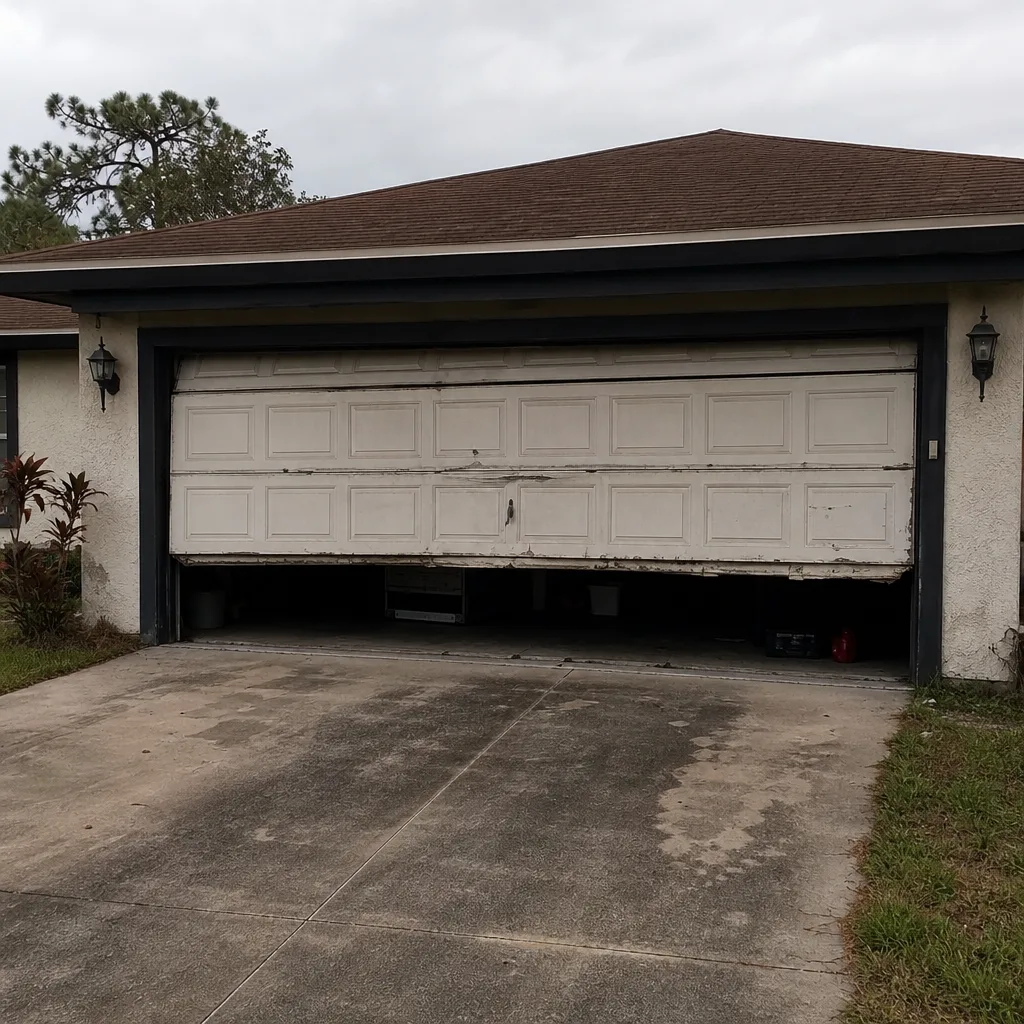 Before
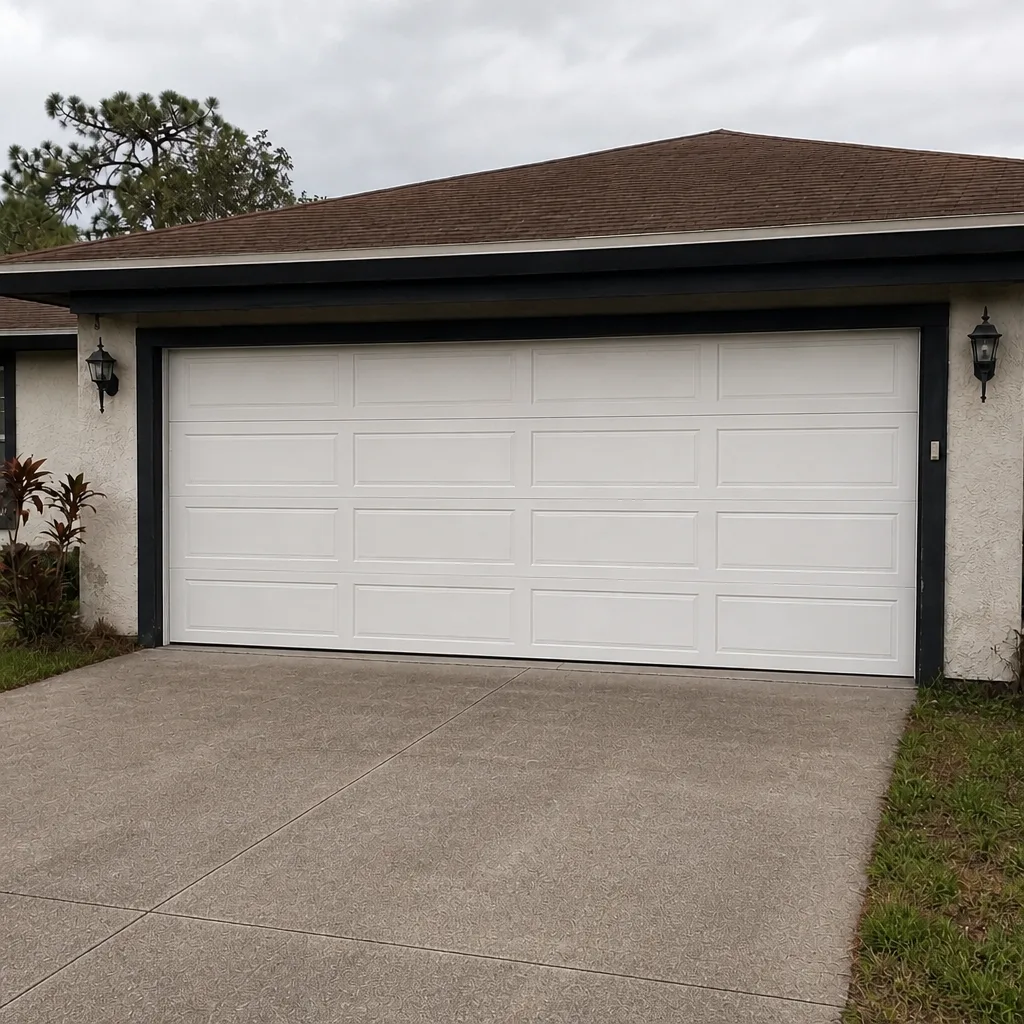 After
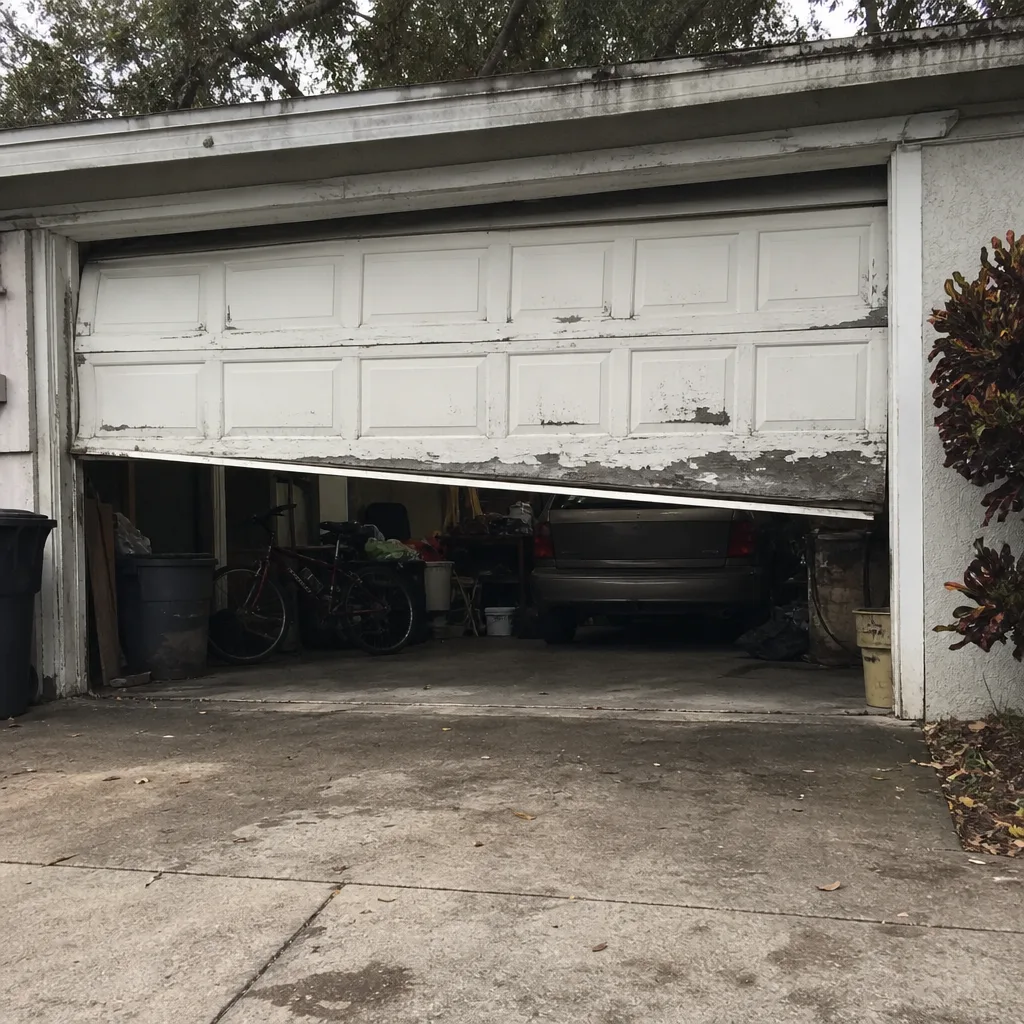 Before
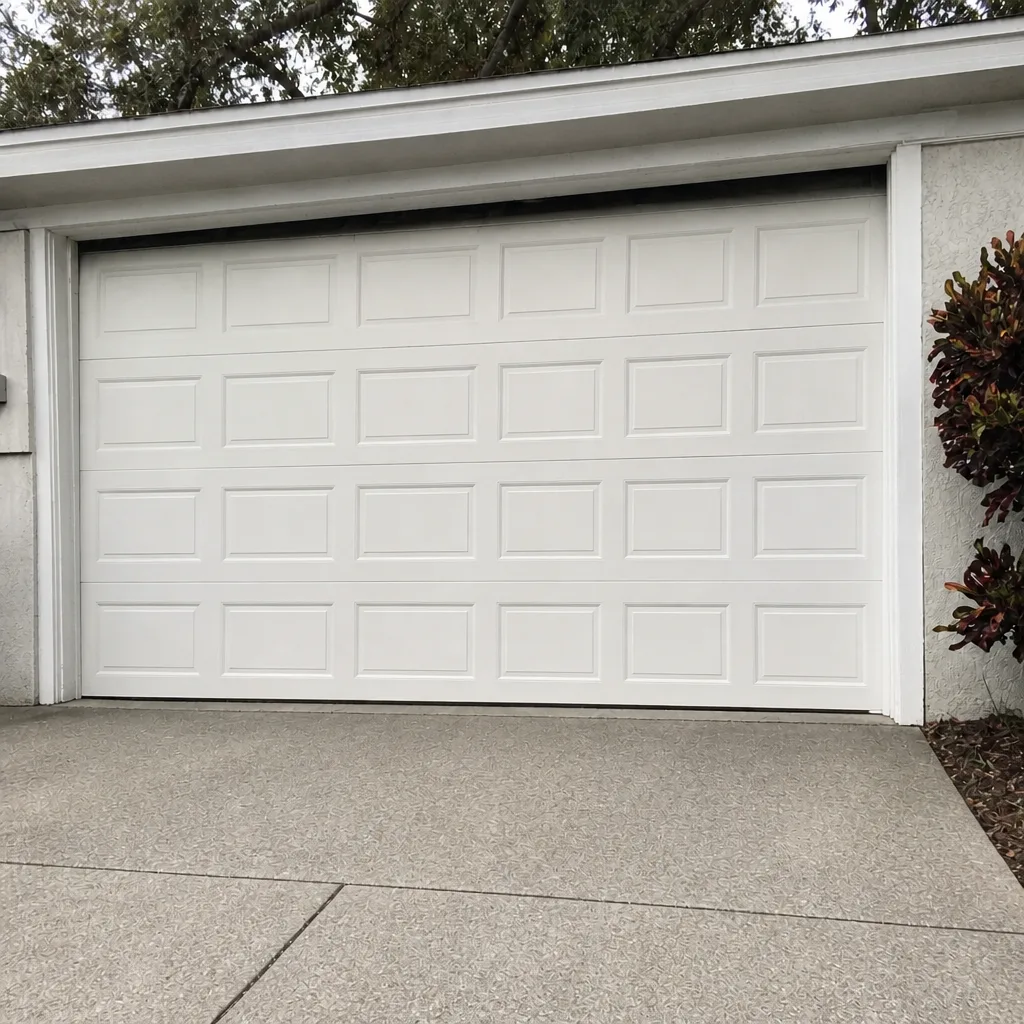 After
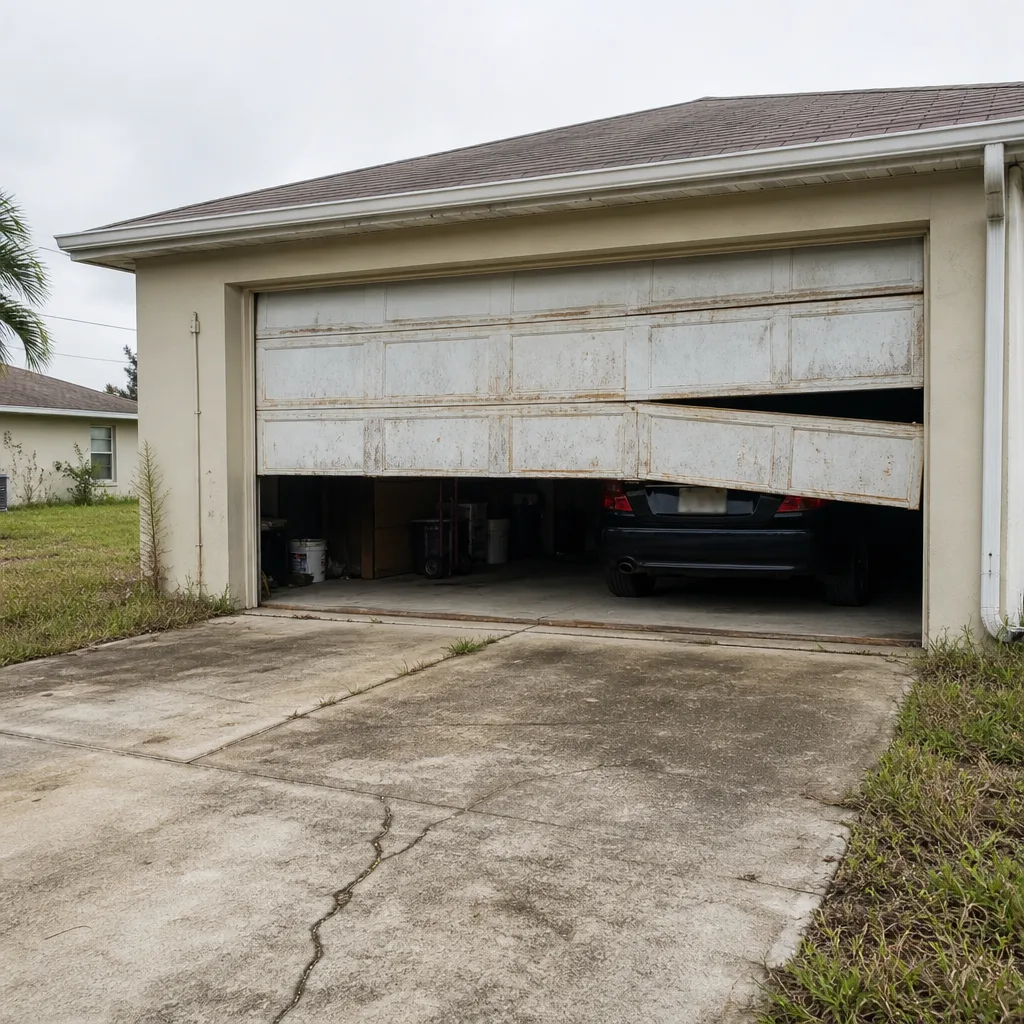 Before
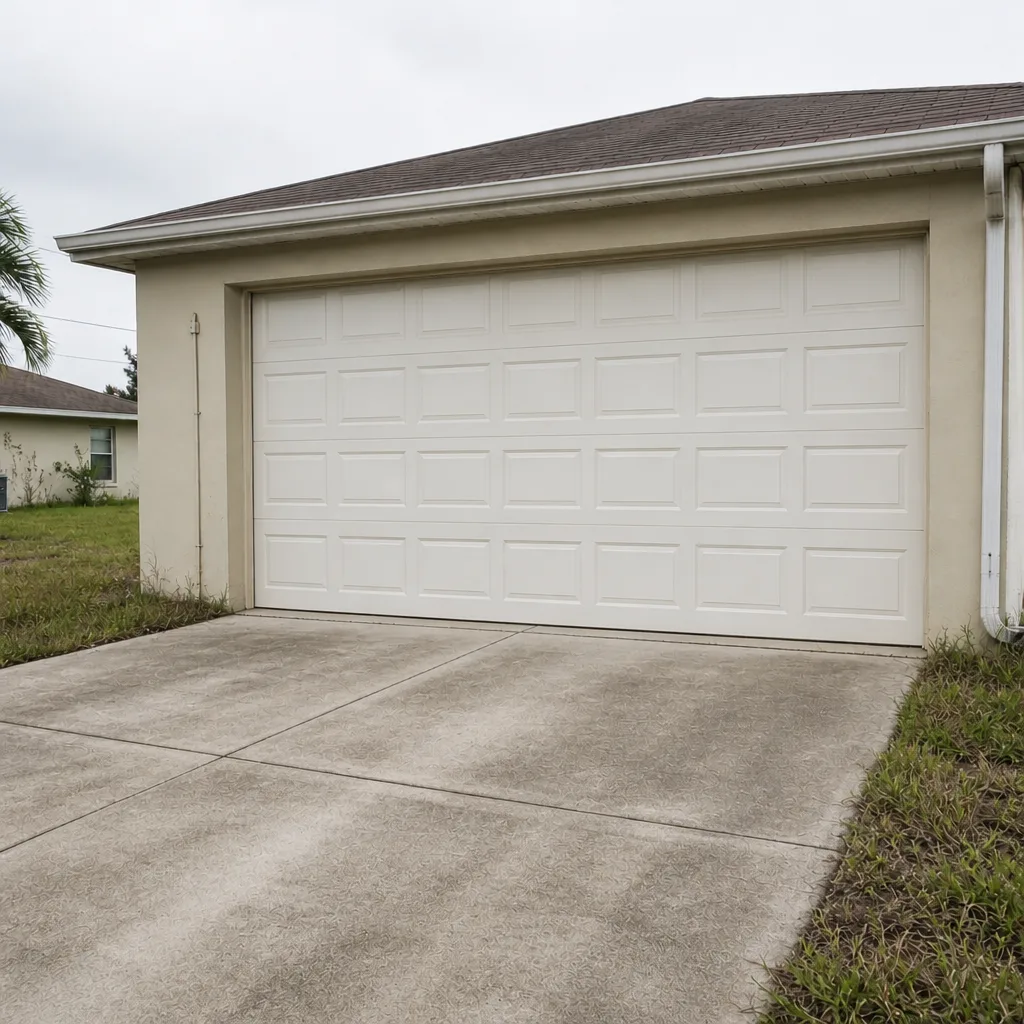 After
Frequently Asked Questions
Because the opener’s down limit or force setting is out of adjustment, or the door is meeting resistance that triggers the safety reversal. Start by checking that the safety sensors are clean and aligned, then look at the travel limits. If the door reverses consistently at the same point, the down limit is the likely cause; call (855) 923-3538 for a free estimate if the settings don’t resolve it.
No. Torsion and extension springs store extreme energy and release it instantly, and the winding and tensioning process requires the right tools and knowledge. A mistaken adjustment can cause serious injury. Call for help rather than attempt it, and stop using the door until it’s repaired.
Typical spring repair in the Lehigh Acres area runs in the range of $180 to $340 for a single spring, with a matched pair usually about twice that. The written estimate you receive before any work begins is the price you pay. Call (855) 923-3538 for an exact quote – estimates are free.
It usually means the opener is trying to move a door it can’t, which points to a mechanical problem such as a broken spring or a jammed cable, or a stripped gear inside the unit. Pull the manual release and try lifting the door by hand – if it’s heavy, the problem is mechanical. If it’s light and free, the opener itself is the issue.
Disconnect the door with the manual release and lift it by hand. If it moves smoothly and stays in position, the door is balanced and the fault is probably in the opener. If it’s heavy or drops, the fault is mechanical in the door or its springs and cables.
Because the humidity kept in the air here never fully dries out, so unprotected steel rusts and lubricants thin out faster than in a drier climate. Cables fray at their bend points and rollers stiffen, which adds drag to the whole system. Routine inspection catches it before a worn roller or cable turns into a bigger repair.
The local professionals we connect you with are licensed and insured as their state requires. Our focus is on matching you with a technician who is trained on your existing door and opener brand, not one who will try to sell you a replacement system.
The Bottom Line
Most garage door problems in Lehigh Acres trace back to one of five mechanical categories, and identifying the right category is the difference between a safe adjustment and a dangerous guess. Springs and cables always require a professional; travel limits and force settings are the safe DIY boundary. The humidity here wears rollers and cables faster, so early signs like slow response, rattle or rust earn a closer look. If your door is crooked, jammed, has a broken spring or a cable that’s snapped, stop using it and call. Reach out for Lehigh Acres Garage Door Repair Co for a free estimate, an agreed price before any work starts, and same-day help on many repairs. A conversation is often all it takes to sort out whether you’re looking at a screwdriver or a technician.
Written by the team at Lehigh Acres Garage Door Repair Co.